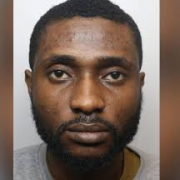
Nigerian Man Gift Oladele Jailed 17 Years for Raping British Woman in Wales

A teenager has recalled the terrifying moment she was dragged into the woods and raped by a Nigerian migrant, who dodged deportation because it would ‘breach his human rights’, the Daily Mail reports.

‎The UK court sentenced the Nigerian migrant, Gift Oladele, to 17 years in prison for the crime.

‎Gift Oladele, 24, targeted the 19-year-old as she walked home on an isolated footpath in Wrexham, Wales, after a night out on September 7 last year.

‎The teenager has now revealed that after the attack, Oladele said to her: ‘I think you’ve had enough now. At least you have been raped by someone good-looking.’

‎Oladele had told the young woman, who wishes to remain anonymous, that he was walking home the same way she was and that he would accompany her.

‎But as they passed an isolated area, he grabbed her by the mouth and forced her into the woods, where he violently raped her.

‎Oladele was found guilty of rape and sexual assault in a Mold Crown Court trial in March.

‎When he carried out the attack, he was already on bail over another rape allegation in his home city of Manchester in November 2024.

‎He was also previously jailed in 2022 for a sexually motivated attack, and it has emerged he successfully fought against deportation to Nigeria on human rights grounds.

Read Also: Mayor Alfred Reveals Why He Is Expanding His Clothing Business

‎Recalling the rape last September, the woman, now aged 20, said: ‘He was a lot bigger than I was – I tried pushing him away, but he overpowered me.

‎‘He was covering my mouth. I was trying to get his arm off me, but he wasn’t budging. That’s when he raped me violently.

‎‘He asked me if it was the first time I had been raped. Pictures of my family kept flashing in my head because I thought he was going to kill me.

‎‘My brain just switched into survival mode – it was weird. It was either I do what he says and I get home to my mum, or he is going to kill me.

‎‘He hit me in the head six times, and my backside and his handprint were bruised on me.

‎‘When he finished, he turned around and said, “I think you’ve had enough now. At least you have been raped by someone good-looking”.’

‎Oladele threatened he would ‘find her’ if she reported the rape, and threatened to take photographs and post them online.

Varsities Face Fresh Crisis as Lecturers Lament Unpaid Salary Shortfalls

FG Blames Universities For Pay Rise, ASUU President Speaks

BY HENRY TYOHEMBA, Abuja, FRANCIS OKOYE, Maiduguri, ABU NMODU, Minna, ACHOR ABIMAJE, Jos, PATRICK OCHOGA, Benin, ANAYO ONUKWUGHA, Port Harcourt, ADEBAYO WAHEED, Ibadan, SAMUEL ABULUDE, Lagos, JOSUA DADA, Osogbo, FEMI OYEWESO, Abeokuta

Fresh concerns are emerging across the federal university system on the implementation of the 40 per cent salary increase for university lecturers, with some institutions unable to pay the full salary package.

The development, which followed the agreement between the federal government and the Academic Staff Union of Universities (ASUU) on the increase about eight months ago, has made some universities to stop payment they initially commenced, citing lack of funds.

Findings across some federal universities revealed that institutions that had started to implement the increment were forced to suspend it because their Internally Generated Revenue (IGR) could no longer bear the additional wage bill.

Top ASUU officials told our correspondents that after the federal government and the union signed the renegotiated agreement on January 14, 2026, with the 40 per cent upward review of academic staff remuneration backdated to January 1, the government directed universities to source the increase from their IGR.

But the ASUU officials could not produce the alleged memo from the federal government directing universities to do so.

The federal government announced on Feb. 1 that it was starting to roll out the increase and told federal universities to factor the new salaries into their payroll systems. Nevertheless, implementation has been uneven.

Some universities had not fully implemented the increment by August and others who had started paying it had stopped. The development has compelled ASUU branches to issue ultimatums and insist on the implementation of the agreement.

Most university managements contacted refused to state reasons for the shortfalls.

Senior officials of ASUU also expressed surprise at how vice-chancellors of institutions that have continued to pay their lecturers in full managed to sustain the payments, despite the funding challenges.

How UNIBEN Dumped Half Salaries

Although some universities were rumored to have been having payment problems since May, the issue remained largely out of the public domain until ASUU branch of the University of Benin (UNIBEN) raised the alarm on Monday.

There is anxiety in UNIBEN over academic activities as lecturers were paid half of their August salaries, while non-academic staff were said to have gotten their full salaries.

Sources at the university said the payment did not include the usual allowances and this had left many lecturers, especially those servicing loans taken out through the university, distressed.

In a notice to members, the UNIBEN ASUU chapter said it had met with the university management on the development and advised members not to panic.

The union has been assured by the university authorities that more salary alerts would be received,” the notice signed by the branch secretary, Dr L. O. Aimiyekagbon said.

But sources familiar with the matter said the university paid the August salaries from its IGR after the federal government failed to release its monthly subvention to the institution.

Yesterday, the branch chairman, Enaruna Edosa, said the executive committee would meet before calling a congress to decide the union’s response.

Speaking to Edosa said the members will ultimately determine the way forward.

“We are meeting as the executive committee now to discuss the matter, and afterward we will convene a congress where all members will participate and decide the way forward. “It is our members who will lead us,” he said.

When contacted, the university’s public relations officer, Dr Benedicta Ehanire, declined to comment, saying the ASUU leadership was better placed to speak on the matter.

The last time the academic staff of the Federal University of Technology (FUT), Minna, got the 40 per cent salary increase was in May.

The branch chairman of ASUU in the university, Prof. Lookman Oyewobi, said the development followed the directive of the federal government that universities should source the fund for the increment from their internally generated funds.

Read Also: Nigerian Influencer Ignored Doctor’s Advice Before Fatal Penis Enlargement Procedure

He said the management was able to absorb the additional salary component from January to May before it stopped the payment as it could no longer afford the cost.

He said the university’s IGR could not be diverted to sustain the salary increase as the funds were tied to services students were charged for specific purposes.

With no more federal money coming to the university to pay for the increase, he said, staff were getting more and more agitated.

He said FUT Minna was relatively better off, as the management had sustained the additional payment for five months, unlike many other universities that could not sustain it.

Lydia Legbo, the university’s head of Information, declined to comment further when asked if salaries had been paid, saying only, “Salary was paid.”

Union members at the University of Maiduguri in Borno State also received part of their salaries in August, ASUU chairman Mohammed Waziri told The Associated Press.

Waziri said that only 10 per cent of the Consolidated University Academic Salary Structure (CONUASS) and the professional allowance for members in veterinary and human medicine were not paid.

“The university has paid the salaries of members for June, July and August but the reimbursement from the federal government is still outstanding,” he said.

When contacted, the university’s public relations officer, Hajiya Amina Abdullahi, said the management was in a meeting and could not say when it would end.

She had not responded at the time of filing the report.

However, Prof. Idowu Keinde, the chairman of ASUU, University of Lagos (UNILAG) chapter challenged the assertion that the shortfall at UNIBEN was a consequence of the inability of the university to receive the federal allocation.

“It is not true that members of UNIBEN ASUU were paid half salaries because the university did not receive federal allocation. Those results should be well known. Now back to your question, we didn’t get our full salaries, in fact, no staff of UNILAG got theirs and it wasn’t because of federal allocations. “Our National Executive Committee has taken cognizance of this development and will deal with it,” he said.

The ASUU branch chairman at the Federal University of Agriculture, Abeokuta (FUNAAB), Dr Ola Olusegun Oyedele said the university did not pay the lecturers their full August salaries because the university did not include the Enhanced Academic Allowance (EAA).

He spoke in Abeokuta yesterday and said FUNAAB management had paid only three months of the eight months of the EAA arrears owed lecturers.

“The five-month bailout fund was released by the federal government, only two months was given to FUNAAB because we are a specialized university. That was the reason why the institution released the three-month EAA,” he added.

Minister’s Aide Calls On NUC To Investigate

The Federal Ministry of Education has ordered an investigation into the delay in the payment of August salaries of the National Universities Commission (NUC).

Ikharo Attah, the special adviser on Media and Communications to the Minister of Education, declined to comment on the situation at UNIBEN and the matter of half salaries, saying the question should be directed to the public relations officer of the university concerned and possibly the NUC.

OAU, UNIPORT, FUTA To Get Full Salaries

But reports of salary shortfalls are not consistent across the federal university system.

Prof. Al-Amin Abdullahi, zonal coordinator of ASUU and a lecturer at the Federal University, Lafia, said salaries were still being paid at his institution.

Read Also: Nigerian Influencer Ignored Doctor’s Advice Before Fatal Penis Enlargement Procedure

“I am at the university, Federal University of Lafia, and salary has been paid,” Abdullahi said.

But he said the Abuja Zone had no statistics to show the number of federal universities that might have experienced the same difficulty.

ASUU members at the University of Port Harcourt (UNIPORT) said they were not aware of any shortfall in the payment of lecturers’ salaries.

Prof. Emmanuel Ngoke, the university’s ASUU chairman, declined to comment on the issue but a senior ASUU official, who asked not to be named, said the union’s members in the university and its Owerri Zone had not received half salary.

“The University of Port Harcourt is in Owerri zone and we have not had any short payment of salaries among members of ASUU in the zone. “We have never seen such a thing before,” he said.

Lecturers at the Federal University of Technology, Akure (FUTA) in Ondo State also said they received their full August salaries.

The ASUU Chairman of the institution, Pius Mogaji, made this known in reaction to reports of half salary payments at UNIBEN.

He said the situation did not affect FUTA where lecturers had received their full salaries for August.

Besides, ASUU members at Obafemi Awolowo University (OAU), Ile-Ife, had been paid their salaries up to August 2026.

But the union’s chairman, Prof. Tony Odiwe said the federal government did not fail to cash-back the payments as agreed with ASUU.

“My vice-chancellor has managed to pay us our full salary up until August. I don’t know how he is doing it, but we are getting paid our salaries. ‘That is all I can say at this time,’ he said.

The chairman of ASUU, University of Jos (UNIJOS) chapter, Prof. Jurbe Joseph Molwus, also said that lecturers in the university had continued to receive their full salary package.

He stressed that the half salary situation was not the situation in UNIJOS, but said that the university’s ability to pay did not mean the federal government had remitted the needed funds.

“It is only the ingenuity of the present leadership of the university under Prof. “The full package of their salaries is not being funded and all the federal universities are suffering because of that,” he said.

As at the time this report was being filed yesterday, ASUU national president, Prof. Christopher Piwuna had switched off his mobile line and could not be reached for comment.

Sexual Abuse: Yahweh Group Says Allegations Must Be Properly Investigated, Rejects Media Trial

The Congregation of Yahweh, Lagos, has denied allegations of sexual abuse, harassment, maltreatment and other forms of misconduct levelled against its leadership and members by some former members of the church.

The congregation, in a statement signed by its Chairman, Assembly, Apst. Yehudah Nnedu, described the allegations as “false, malicious and unfounded,” insisting that the issues raised by the former members should be subjected to proper investigation rather than determined through social media publications.

The statement followed an interview circulated on YouTube, Facebook, WhatsApp and other platforms in which four former members of the congregation — Diuto Okwuonu, Ugomma Okwuonu, Amara Okwuonu and Susana Okwuonu — alongside their mother, Naomi Okwuonu, made allegations against the church, its General Overseer, members of her family and other members of the congregation.
The church said it was particularly concerned that the allegations were being circulated while a petition involving the parties was still under investigation by the Gender Unit of the Lagos State Police Command, Ikeja.

According to the congregation, it does not trivialise allegations of sexual misconduct, particularly where a child is involved, but maintained that the seriousness of an allegation should not be interpreted as proof of guilt.

“The Congregation of Yahweh categorically denies all allegations as false, malicious and unfounded,” the statement said.
On an allegation by Diuto Okwuonu of attempted sexual harassment and beating, the church said no member of its leadership had ever sexually harassed, made sexual advances towards or beaten her.

It described the allegation as fabricated, saying no such incident had previously been reported either within the church or to law enforcement authorities before the recent media campaign.

Responding to Ugomma Okwuonu’s allegation that she and two other sisters were sexually abused and “passed from one brother to another”, the church described the claim as “grievous, incestuous and highly defamatory.”

The congregation maintained that no male member of the church had any sexual relationship with Ugomma, adding that Brother Emmanuel was only betrothed to Susana Okwuonu.

It further alleged that the narrative was aimed at damaging Emmanuel’s marriage, faith and reputation, while insisting that its moral standards did not permit or institutionalise sexual misconduct.

On Amara Okwuonu’s allegation that the church’s General Overseer maltreated her and terminated her university education in Ghana following the annulment of her marriage, the congregation denied the claim.

It said the decision concerning her scholarship was not punitive but a collective family and institutional decision influenced by available resources, concerns over academic conduct and moral standards, as well as conditions attached to the institutional support.

The church also disputed allegations concerning Susana Okwuonu, whom it identified as the former wife of Brother Emmanuel.

According to the congregation, Susana allegedly left her matrimonial home and child for more than two years before returning to seek custody.

The church, however, stressed that the welfare and best interests of the child should remain paramount.

On the allegation involving Mrs Naomi Okwuonu’s employment with Union Bank, the congregation denied directing her to leave the bank.

It said her disengagement occurred during a period when the bank was undertaking staff rationalisation and downsizing, adding that decisions she subsequently made regarding her employment and pension benefits were personal decisions.

The congregation also accused the former members and their mother of engaging in what it described as continuous “false commentaries, insults, name-calling and videos” against the church, its General Overseer and her family.

It alleged that the activities had created tension within the community and claimed that one of the former members had been seen around the family residence with unidentified persons.

Read Also: Mike Bamiloye’s ‘Agbara Nla: The Return’ Hits Cinemas October 1

The church said the matter had been reported to the Festac Police Division, adding that it had preserved the allegedly defamatory videos, publications and social media posts for possible legal proceedings.

The Congregation of Yahweh also drew attention to what it described as years of assistance provided to the Okwuonu family.

It listed free accommodation, feeding and basic necessities, educational expenses, medical care and other welfare support among the assistance allegedly provided to the family.

It also claimed that the church facilitated an all-expenses-paid pilgrimage or trip to Israel for the family’s father.

The congregation said the history of assistance had been omitted from the allegations being circulated against it.

It maintained that members were free to leave the church but argued that departure should not be used as a basis for what it described as rewriting the history of the relationship between the family and the congregation.

The church said it had briefed its lawyers and was taking steps to protect the reputation and rights of its leadership and members.

It said it would consider appropriate civil and criminal legal action against persons responsible for what it described as false publications, as well as facilitators, publishers or platforms that continued to disseminate unverified allegations.

The congregation also called on all parties to preserve recordings, publications, social media posts and other materials relating to the allegations, saying they could become relevant evidence.

Cross River: Otu Prioritising Culture, Tourism in State Development – Obudu Chairman

The Chairman of Obudu Local Government Council, Hon. Dr Peter Undiandeye, has said Governor Bassey Edet Otu is placing culture and tourism at the heart of Cross River State’s development agenda.

Speaking at the 2026 Obudu New Yam Festival – Bewhutang, held at the council secretariat field over the weekend, Undiandeye described the Governor’s support for cultural festivals as a strategic investment capable of promoting unity, attracting tourists, creating jobs and stimulating economic growth.

“Cross River is endowed with diverse cultural traditions, festivals and heritage sites capable of attracting visitors and generating economic opportunities.

Read Also: Sikiratu Sindodo Reveals How Severe Illness Left Her in Coma With 50/50 Survival Chance

“The Governor’s renewed emphasis on cultural tourism will enable communities to turn their cultural heritage into an important economic asset,” the council boss said.
The Council Chairman noted that the economic benefits of cultural tourism extend directly to the grassroots, providing opportunities for farmers, traders, artisans and young entrepreneurs.

He urged communities across the state to support the Governor’s vision by preserving traditions and creating an environment that can attract tourists and investors.

Undiandeye also commended the Central Planning Committee for a successful Bewhutang and announced that the project for a new Paramount Ruler’s Palace in Obudu had reached the PVC stage.

The Paramount Ruler, HRM Utsu Felix Ukudare, represented by High Chief Tony Undiandeye, described the festival and palace project as important platforms for preserving Obudu’s history and identity.

Bandits Killed Pastor Hills While He Tried to Escape — Survivor Recounts Ordeal

Pastor Gabriel Joseph Dipak, who was abducted by Fulani bandits on Friday, August 28, 2026, along with Pastor Emmanuel Hills, a Ghanaian-Nigerian cleric based in Bokkos Local Government Area of Plateau State, has narrated how the kidnappers slaughtered Hills after he attempted to escape.

Dipak, a pastor with the Christ Apostolic Church, was abducted along with Hills, a former Dunamis Church pastor and founder of The Wonderful Grace of God Evangelical Ministry, while they were travelling from Jos to Bokkos with other passengers.

They ran into a roadblock mounted by Fulani militants along the Barkin Ladi-Bokkos Road.

According to Dipak, they were singled out and taken captive, while the other passengers, including Hills’ wife, were robbed and allowed to leave.

Dipak, who narrated the harrowing experience that led to Hills’ murder, said the Ghanaian-born pastor attempted to escape from the bandits, but they pursued him.

He said when they caught him, they stabbed him several times before pinning him down and slaughtering him in the same manner a goat is slaughtered.

Read Also: All Eyez on the Truth: How Tupac Shakur’s Murder Was Solved 30 Years Later

Dipak, who made the revelation in a video interview with conflict journalist, Masara Kim Usman, also said the bandits told him he was lucky he was not a Berom or Mwaghavul man, as they would have killed him immediately.

“We were travelling from Jos to Bokkos that Friday after a programme.

“Before then, I did not know Pastor Emmanuel Hills, but when we got talking and introduced ourselves, I realised he was also a man of God who was based in Bokkos,” Dipak said.

Continuing, he said:

“We were approaching an intersection that would lead to Bokkos at about 9 pm when we ran into a roadblock. We saw flashlights on the lonely road, and I knew they were not soldiers.

“As the driver tried to manoeuvre past the obstacles, four heavily armed men came out of the bush, shouting, ‘Allahu Akbar.’ We knew immediately that they were Fulani militants. They pointed guns and machetes at us, forcing the driver to stop.

“When the vehicle stopped, they commanded all the occupants to lie on the ground and began robbing us. When they realised that Pastor Hills and I were men of God, they singled us out and told the other passengers to get back into the vehicle. They then ordered the driver to go.

“They told us they were Fulani people and that we had been kidnapped. While we were marching towards the surrounding hills, Pastor Hills tried to escape, but they pursued him.

“When he was caught, they began stabbing him. They then proceeded to slaughter him like you would slaughter a goat. He was killed within two minutes, and they even boasted and joked about how Hills struggled before he died.

“We trekked for several hours and arrived at their camp in the hills, where they tied my hands and told me they had been monitoring my movements from Jos and had received orders to kill me,” he said.

“They asked me my tribe, and when I told them, they said I was lucky I was not Mwaghavul or Berom, or else they would have slaughtered me without thinking twice.

“I was released the next evening after they called my wife and family members, who managed to arrange the ransom for my release,” Dipak said.

Marwa Orders NDLEA to Target Drug Cartels’ Financiers, Hidden Wealth

The Chairman of the National Drug Law Enforcement Agency (NDLEA), Brig. Gen. Buba Marwa (retd.), has called for a stronger financial offensive against drug cartels, saying the agency must target the wealth and financial networks that keep the illicit narcotics business alive.

Marwa said the fight against drug trafficking should no longer be measured mainly by the number of suspects arrested or quantities of drugs intercepted, arguing that criminal networks could quickly recover from such losses if their financiers and assets remained untouched.

He spoke in Abuja on Wednesday at the opening of a specialised training programme for investigators and prosecutors on financial investigation, asset tracing and recovery.

The programme is also focused on forfeiture and the management of assets connected to drug trafficking and other organised crimes.

The NDLEA chairman said drug trafficking should be viewed as a business built around financial gain, with networks extending beyond those physically caught transporting or selling narcotics.

According to him, financiers, money launderers, facilitators and other professionals who help criminals conceal or move illicit funds are critical to the survival of drug organisations.

He therefore charged investigators to follow financial trails alongside conventional drug investigations.

“If we arrest the courier but leave the financier untouched, seize the drugs but allow the proceeds to remain with the criminal enterprise, or secure a conviction without recovering the illicit wealth, we have addressed only part of the problem,” Marwa said.

He said weakening the financial strength of traffickers would make it more difficult for criminal organisations to replace seized drugs, recruit new members and finance further operations.

Marwa warned that drug networks were becoming more difficult to track as criminals increasingly turned to technology and sophisticated financial arrangements to hide their proceeds.

He said investigators now had to contend with cryptocurrency transactions, layered corporate structures and legitimate businesses allegedly being used to disguise the source and ownership of criminal assets.

The development, he said, required a corresponding improvement in the technical capabilities of law enforcement officers.

According to Marwa, NDLEA personnel must be able to unravel complicated transactions, determine the real owners of assets, gather digital evidence and trace proceeds of crime beyond Nigeria’s borders.

He said, “The sophistication of organised crime demands a corresponding sophistication in our response.

“We must move from crime detection to crime disruption; from arresting offenders to dismantling criminal enterprises; and from confiscating drugs to depriving traffickers of the wealth that motivates and sustains their activities.”

Marwa said the NDLEA had made progress in intercepting narcotics and prosecuting suspects, but stressed that the next phase of the agency’s operations must focus on making the illicit drug business financially unattractive.

He said traffickers should not be allowed to retain properties, bank balances and other benefits acquired from criminal activities after their drugs had been confiscated.

The NDLEA chairman said successful enforcement should leave criminal networks without the resources required to rebuild their operations.

He added that the agency’s goal was to turn narcotics trafficking into a venture where the risks substantially outweighed potential profits.

Marwa also identified connections between narcotics trafficking and other criminal activities, saying drug networks often operate within a broader organised crime ecosystem.

He listed corruption, money laundering, cybercrime, human trafficking and illegal arms dealing among crimes that could intersect with the narcotics trade.

“The drug trafficking ecosystem intersects with money laundering, corruption, cybercrime, human trafficking, illicit arms trafficking and other forms of organised crime,” he said.

Marwa said such connections made cooperation between different law enforcement institutions essential.

He also called for closer coordination within the NDLEA, particularly among officers handling intelligence, investigations, prosecutions, forensic analysis and financial and asset investigations.

According to him, intelligence gathered by one department should feed into the work of others rather than remain isolated.

Officials of the Economic and Financial Crimes Commission (EFCC), the Independent Corrupt Practices and Other Related Offences Commission (ICPC), and the Nigeria Financial Intelligence Unit (NFIU) attended the programme.

Marwa said the institutions’ involvement was important because successful asset recovery often requires cooperation between investigators, prosecutors, and the judiciary.

Among the experts engaged for the training were recently retired Circuit Judge Michael Hopmeier of the Southwark Crown Court in the United Kingdom; former ICPC Chairman Prof. Bolaji Owasanoye (SAN); and the Director of Public Prosecutions of the Federation, Rotimi Oyedepo (SAN).

Read Also: Headies Denies Sidelining Gospel Artistes Following Gaise Baba’s Allegation

Other participants included experts in cryptocurrency, money laundering and international asset recovery.

Beyond identifying and confiscating criminal assets, Marwa warned officers against mismanaging recovered property.

He said an asset could lose considerable value between seizure and eventual disposal if it was not properly managed.

According to him, mishandling recovered assets could also create doubts about the integrity of the forfeiture process.

He therefore demanded transparency at every stage, including seizure, forfeiture, custody, management and eventual realisation of recovered assets.

Marwa urged officers attending the training to share the expertise acquired with colleagues and ensure that the lessons were reflected in future investigations.

He said the agency expected participants to become better equipped to trace suspicious transactions, locate concealed assets, produce stronger evidence and obtain forfeiture orders against drug traffickers.

The Chief Judge of the Federal High Court, Justice John Tsoho, also backed closer cooperation between the judiciary and agencies combating narcotics and financial crimes.

In a goodwill message delivered on his behalf by Justice Inyang Ekwo, Tsoho said the changing nature of drug-related offences required more sophisticated law enforcement techniques.

He said the scope of narcotics crime had expanded beyond conventional drug trafficking to areas such as financial crime and cryptocurrency-enabled money laundering.

According to the message, the subject of the training demonstrated “how extensive and multifaceted drug crimes are and can be, and their ever-expanding frontiers, which ought to be tackled by effective and sophisticated law enforcement.”

Tsoho also commended the NDLEA leadership for its efforts against drug trafficking, saying stronger cooperation between the Federal High Court and law enforcement institutions could enhance Nigeria’s reputation in the international fight against organised crime.

Why National Assembly Must Fast-Track Decriminalisation Of Attempted Suicide

At the 80th United Nations General Assembly High-Level Political Declaration Meeting on Non-Communicable Diseases and Mental Health, Nigeria reaffirmed its global commitments to increase access to mental health services for millions of citizens and to move away from punitive suicide laws. This important step saw the country join the global movement that views attempted suicide as a public health and mental health concern, not a criminal offense.

The World Health Organization (WHO) estimates that more than 700,000 people commit suicide globally each year, making it the second leading cause of death for young people. WHO’s position is clear: suicide is fundamentally a public health problem, not a crime, and decriminalizing attempted suicide is a proven, evidence-based intervention necessary to reduce mortality.
Ghana has already decriminalized attempted suicide in Africa and is now building its response to suicide prevention and mental health around a more supportive framework. For example, Kenya has progressed through judicial and legislative debates on reform, whereas many countries on the continent are still deliberating laws that remain from the former legal systems. In Botswana, as in some other African countries, attempted suicide is not a criminal offense.

The country is among the few on the continent with the most recent legislation in this regard, having repealed the Lunacy Act of 1958 and introduced the National Mental Health Act in 2022. But the missing piece is the decriminalization of attempted. This provides an opportunity for Nigeria to not only learn from global best practices, but also to strengthen her position as a leading African voice for mental health reforms.

People in their lowest moment have been subjected to double jeopardy for decades in Nigeria, suffering extreme psychological distress and then threatened under Section 327 of the Criminal Code Act in the South or Section 231 of the Penal Code in the North to up to one year in prison for a failed suicide attempt.

On December 28, 2022 the former President Muhammadu Buhari gave presidential assent to the landmark National Mental Health Act 2021, which marked a turning point for the path toward mental health legislative reforms in Nigeria. This landmark legislation repealed the obsolete Lunacy Act of 1958 and created a rights-based framework prohibiting disenfranchisement and requiring the development of a specific national suicide prevention strategy.

In this legislative context, the Federal Ministry of Health and Social Welfare, headed by the Coordinating Minister of Health and Social Welfare, Prof. Muhammad Ali Pate, launched the National Suicide Prevention Strategic Framework (2023–2030) in November 2023. The strategy is aligned with the Sustainable Development Goals (SDGs), including a national target to reduce the suicide mortality rate by 15 per cent by 2030. One of the key policy actions to achieve this is the decriminalization of attempted suicide.

Recognizing that legal reform needs to connect health policy with statutory law, the Ministry of Health joined forces with the Federal Ministry of Justice and the Office of the Attorney General of the Federation to launch the National Taskforce on the Decriminalization of Attempted Suicide on World Mental Health Day in October 2024. The taskforce, chaired by health law authority, Professor Cheluchi Onyemelukwe, and with Dr Ojo Tunde Masseyferguson, the National Coordinator, National Mental Health Program at the Federal Ministry of Health as the secretary, comprises professional associations, civil society organizations, people with lived experience and key government agencies. It was tasked with conducting national stakeholder engagements, debunking socio-cultural and religious myths and charting an actionable path forward.

The task force acknowledged that suicide is greatly affected by culture, religion and social beliefs. It thus embarked on consultations and national conversations with multiple stakeholders, including religious leaders and people with diverse views on the issue. These engagements were important as some of the proponents of criminalization had argued that punishment could be a deterrent and reinforce the sanctity of life. But the emerging public health position was that punishment does not address the underlying distress that may have led to the attempt.

The campaign centered on one simple but powerful principle: people in distress need help, not handcuffs. The task force concluded that the most efficient and politically feasible approach to the abrogation of the punitive articles of the Criminal and Penal Codes was a targeted executive bill amending the National Mental Health Act. This momentum reached a historic high-water mark when the Federal Executive Council (FEC) officially threw its full weight behind the policy, approving the proposed amendment bill for transmission to the legislature on the 21st of August, 2026. “This is a major milestone but far from the end of the road.

Read Also: Davis Found Guilty Of Killing Tupac Nearly 30 Years Later

Decriminalizing attempted suicide will change the mental health landscape of Nigeria by replacing fear with help and compassionate care. Under the legacy criminalization framework, people in serious distress are forced to conceal their struggles under the threat of police arrest, prosecution and social exile. Decriminalization creates a safe environment where survivors can come forward to receive medical, psychological and social support without fear of penalty. This also improves public health surveillance by removing legal sanctions and providing accurate data for national planning, resource allocation for healthcare and targeted suicide prevention efforts across the country.

But executive approval isn’t the end of the road. The proposal still needs to be passed through legislative processes in both the Senate and the House of Representatives before Nigeria can completely remove provisions criminalizing an unsuccessful attempt to take one’s life. This is a chance for the National Assembly to bring to conclusion a reform which has already gone through years of policy development, consultation and inter-ministerial engagement.

There is no request for Nigeria to re-invent its entire mental health architecture. The country already has a National Mental Health Act . It has a National Mental Health Policy” It has a National Suicide Prevention Strategy Framework, The urgent legislative request is a specific amendment to ensure that suicide attempts are no longer criminalized .

Worries about what happens after decriminalization have also been considered. The current strategic framework already identifies responsibilities for prevention, screening, service delivery and intervention. The proposed amendment also provides for regulatory powers to strengthen the post-decriminalisation response.

As the approval heads to the National Assembly, lawmakers need to pass the amendment bill into law formally. The legislative clock is ticking down fast before the next electoral cycle and this focused amendment cannot wait. The National Assembly needs to act fast to ratify decriminalization of attempted suicide, replacing prosecution with compassion, medical care and psychosocial support.

The National Assembly must not let the journey grind to a halt at the last mile. We therefore call on the Senate President, HE Godswill Akpabio, Speaker of the House of Representatives, Rt. Hon. Tajudeen Abbas and other committees in both chambers to quickly ratify this bill. Decriminalizing attempted suicide will send a strong message that Nigeria recognizes mental distress as a health issue that requires intervention, compassion and access to care. It will also reinforce the country’s commitment to the international course it has already taken.

Annie Macaulay Covers 2Baba’s Name Tattoo With Butterfly Design

Nollywood actress Annie Macaulay has sparked reactions on social media after revealing that she has covered the tattoo of her ex-husband, music star 2Baba, with a butterfly design.

The actress unveiled the new tattoo in photos shared on her Instagram page on Tuesday, where fans noticed that the “Idibia” inscription previously inked on the left side of her chest had been replaced with the image of a butterfly.

The change comes shortly after Annie shared a message about embracing a new chapter in her life, a post that many followers interpreted as a sign that she is moving forward.

Annie and 2Baba’s relationship came to an end following their widely publicised separation, which attracted significant attention from fans and the entertainment industry.

Her latest tattoo transformation has since generated widespread discussion online, with many social media users describing it as a symbolic step toward healing and a fresh beginning.

Neither Annie nor 2Baba has publicly commented on the significance of the tattoo cover-up.

New lease of life for much-loved Welsh theme park after being sold

GreenWood Family Park, one of North Wales’ most popular family destinations, is entering a new chapter after being acquired by the Wood Family Group.

The attraction, located on the edge of Eryri National Park, has built a strong reputation for combining fun with environmental sustainability. The park welcomes more than 110,000 visitors every year and features over 15 rides and attractions designed for families and nature lovers.

The new owners have pledged to preserve the park’s unique identity while investing heavily in its future. Planned upgrades include brand-new rides, interactive play areas, family experiences, and improved visitor facilities.

Speaking on the acquisition, Andrew Wood, Director of the Wood Family Group, described GreenWood as a treasured attraction with a loyal fan base. He said the family is committed to protecting everything visitors love about the park while introducing fresh experiences that will keep guests coming back.

The Wood Family Group also praised the park’s staff, saying their dedication and passion will remain central to GreenWood’s continued success.

Former owner Continuum Attractions, which purchased the park in 2017, invested around £1.5 million during its ownership. The investment helped expand the attraction with new themed experiences and a Tipi Glamping village, strengthening its appeal as one of the region’s top family destinations.

Read Also: Tobi Bakre Reacts as Fans Campaign for Him to Become Marvel’s Next Black Panther

Continuum Attractions CEO Andrew Pawson thanked employees, partners, and guests for supporting the park over the past seven years. He expressed confidence that the new owners would continue GreenWood’s tradition of creating memorable family experiences.

One of the park’s biggest attractions remains Solar Splash, the UK’s first solar-powered water ride. Launched in 2016, the ride uses renewable energy generated from hundreds of solar panels to power its operation, highlighting GreenWood’s long-standing commitment to sustainable tourism.

The park is also home to the Green Dragon Roller Coaster, recognized as the world’s first people-powered roller coaster, making it a standout attraction for visitors seeking unique experiences.

The Wood Family Group says guests can expect several major announcements in the coming months as new attractions, entertainment events, and family experiences are unveiled.

With fresh investment on the way and a commitment to preserving its eco-friendly heritage, GreenWood Family Park appears set for an exciting new era, offering even more reasons for families to visit one of North Wales’ most beloved attractions.

Tobi Bakre Reacts as Fans Campaign for Him to Become Marvel’s Next Black Panther

Nollywood actor Tobi Bakre has reacted after fans suggested he would have been the ideal choice to play the next Black Panther in Marvel Studios’ blockbuster franchise.

The conversation gained momentum after Marvel announced that British actor David Jonsson will take over the iconic role in Black Panther 3, which is slated for release in December 2028.

Following the announcement, a fan on social media named Bakre as their preferred choice for the superhero role, prompting the actor to respond with a humorous remark that quickly went viral.

Although Bakre never claimed to be in the running for the role, his playful response sparked excitement among fans, many of whom praised his charisma, acting talent and on-screen presence.

Marvel’s decision ushers in a new era for the franchise following the death of Chadwick Boseman, whose portrayal of King T’Challa became one of the most celebrated performances in the Marvel Cinematic Universe.

Instead of recasting Boseman’s character, the studio is moving the story forward with Prince T’Challa, the late king’s son, who was introduced in the post-credit scene of Black Panther: Wakanda Forever.

David Jonsson, known for his roles in Alien: Romulus and The Long Walk, will headline the upcoming sequel, with Ryan Coogler returning as director. Letitia Wright and Winston Duke are also expected to reprise their roles.

While Marvel has already chosen its next Black Panther, the online support for Bakre reflects the growing desire among fans to see more Nigerian actors land leading roles in major Hollywood productions.