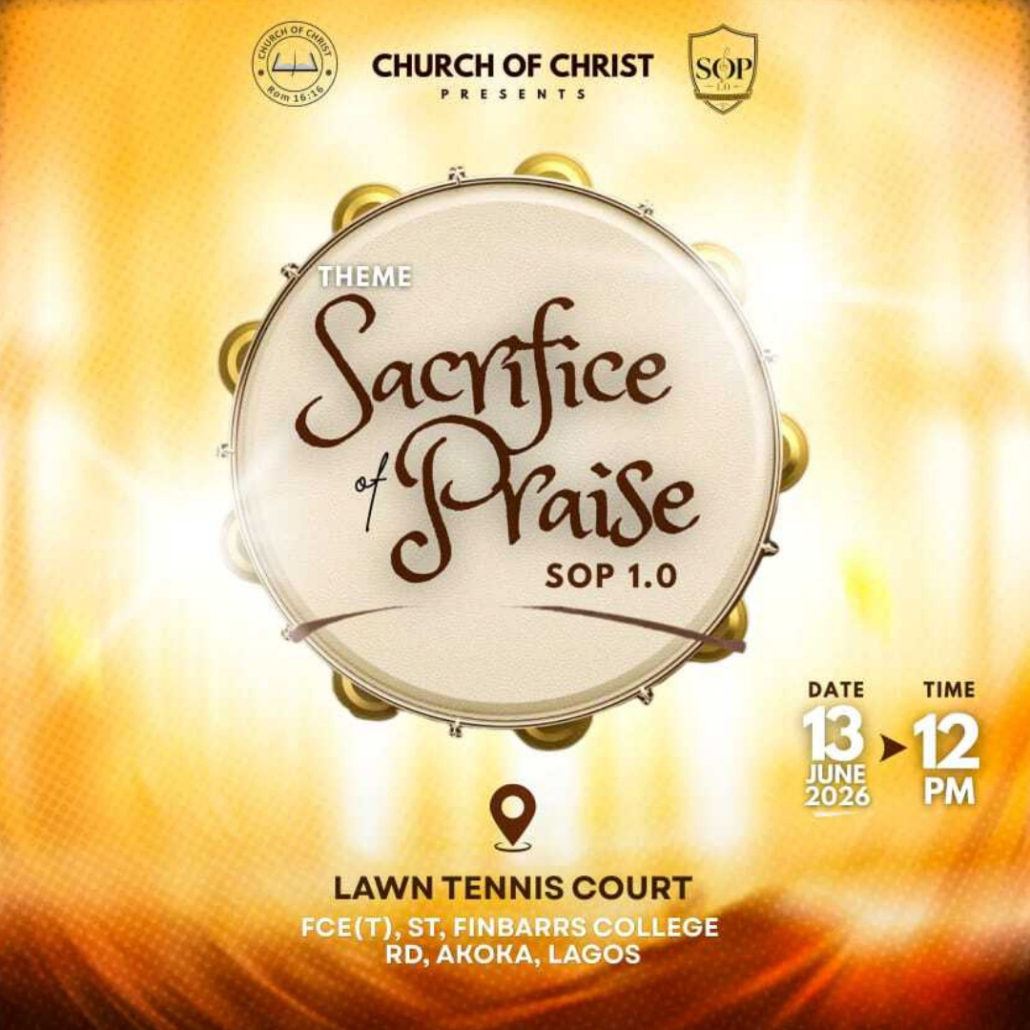
Lagos is set to witness a unique musical and worship experience as more than 500 voices come together for the maiden edition of Sacrifice of Praise, an A Cappella praise concert billed to hold on Saturday, June 13, 2026.
Unlike conventional concerts that rely on bands and musical instruments, Sacrifice of Praise (SoP 1.0) will feature hundreds of singers using only their voices to create powerful harmonies in worship and praise to God.
Organizers say the event is designed to celebrate the beauty of a cappella music while fostering unity, faith and community through collective worship.
The concert, tagged SoP 1.0, is expected to draw participants from churches, schools, music ministries and choral groups across Lagos and neighbouring communities.
According to the Convener, Kingsley Bassey (KsB) attendees should expect an inspiring atmosphere marked by musical renditions, uplifting vocal perfeomances and moments of heartfelt praise.
The event will take place at the Lawn Tennis Court, Federal College of Education (Technical), Akoka, off St. Finbarr’s College Road, by the University of Lagos Main Gate, beginning at 12 noon.
Admission is free, but registration is compulsory. Intended attendees can register, by clicking this box 📦 | For lovers of music, worship, and choral excellence, Sacrifice of Praise (SoP 1.0) promises an experience where the human voice takes centre stage in worship to God.
https://teamhousetv.com/wp-content/uploads/2026/06/NEW-PIC-NEWS-SOCIALSIZE-FOR-THTV-3-Made-with-PosterMyWall-1.jpg10801080Saphirre Eniolahttps://teamhousetv.com/wp-content/uploads/2026/02/TeamHouseTV.Com-Website-Logo-2-300x111.pngSaphirre Eniola2026-06-02 19:08:142026-06-02 19:36:55Extraordinary Sacrifice of Praise 1.0: Over 500 Voices Set for Lagos’ A Cappella Worship Experience
Before Afrobeats became a global phenomenon, before African artists filled stadiums across continents and dominated international charts, there was a man whose voice could make a nation pause and listen.
His songs carried messages of hope, struggle, faith, justice, and redemption. He sang about the realities of everyday life while reminding people to believe in something greater than their circumstances.
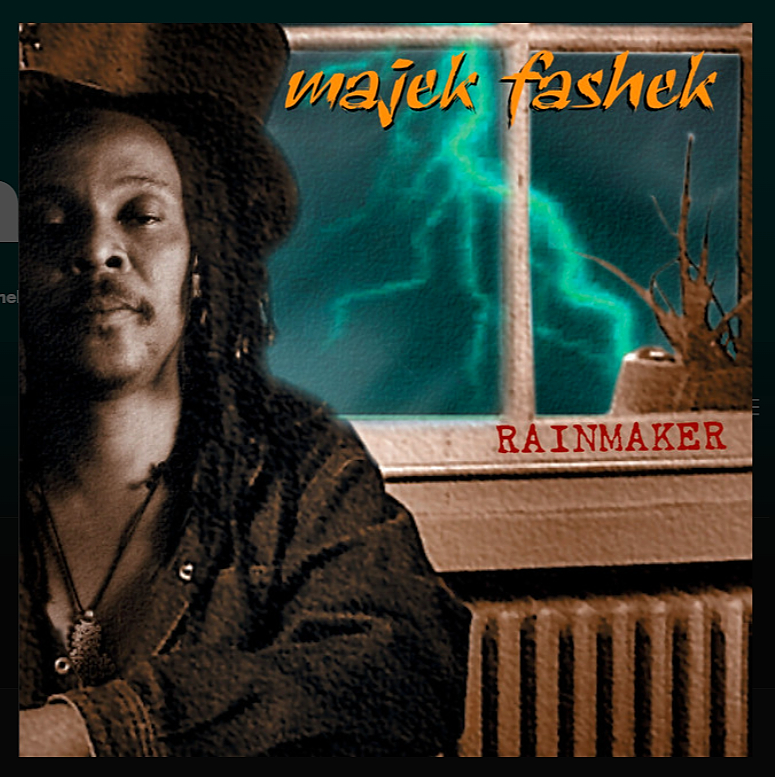
Six years ago today, on June 1, 2020, Nigeria and the world lost one of its most iconic musical voices. Yet even in death, the Rainmaker remains one of the most influential figures in African music history.
Born Majekodunmi Fasheke in Benin City, Edo State, Majek Fashek emerged in the 1980s with a sound that defied easy classification. Blending reggae, rock, and African rhythms, he created music that was uniquely his own. At a time when Nigerian music was still searching for broader international recognition, Majek stood out as an artist whose message resonated far beyond borders.
To many, he was more than a musician.
He was a storyteller.
A social commentator.
A spiritual voice.
And for countless listeners, he was a source of hope.
His breakthrough hit, Send Down the Rain, became more than just a popular song. It evolved into an anthem. Decades after its release, the record remains one of the most recognizable songs ever produced by a Nigerian artist. Its message of hope, renewal, and divine intervention continues to resonate with listeners facing difficult seasons in life.
But Majek Fashek’s legacy cannot be defined by one song alone.
Throughout his career, he used music as a platform to address issues that many artists avoided. He sang about corruption, injustice, faith, peace, poverty, perseverance, and the human condition. His music encouraged listeners to reflect on society while finding strength within themselves.
At a time when music was often viewed primarily as entertainment, Majek demonstrated that songs could also educate, challenge, inspire, and heal.
His work reflected a deep concern for humanity and a belief that music should serve a purpose beyond commercial success.
Like many great artists, Majek’s life was not without struggles. He faced personal battles that often played out in the public eye. Yet even through difficult periods, the impact of his music remained undeniable.
His influence can still be heard in today’s generation of African artists who continue to draw inspiration from his courage, originality, and commitment to meaningful storytelling.
Six years after his passing, revisiting Majek Fashek’s music feels less like nostalgia and more like a reminder of the values he stood for.
For those looking to reconnect with his legacy, six songs continue to capture the depth of his artistry and message.
More than a classic hit, this song remains a powerful prayer for hope, restoration, and breakthrough. It reminds listeners that difficult seasons do not last forever and that renewal is always possible.
A deeply spiritual record that reflects Majek’s faith and desire for a more compassionate world. The song speaks to the power of love, peace, and divine guidance.
We recommend this song not because it is for everyone, but because it offers something increasingly rare in music: a challenge to think. Decades after its release, societies around the world continue to debate the influence of religion on politics and public life, making its message as relevant today as ever.
A song about patience, resilience, and perseverance. It speaks directly to anyone who has faced hardship and continued pushing forward despite setbacks.
This record challenges leaders and individuals alike to live with integrity. Its central message remains simple yet powerful: words mean little without action.
Through this powerful record, Majek Fashek champions the idea that Africa’s progress depends on unity rather than division. The song celebrates a shared identity while encouraging peace, collaboration, and collective growth. Decades later, its message remains a timeless reminder that the dream of a stronger Africa begins with Africans standing together.
Today, six years after his passing, Majek Fashek remains far more than a music legend.
He remains a voice of conscience.
A messenger of hope.
A symbol of resilience.
His songs continue to inspire new generations who may never have seen him perform but can still feel the power of his message through the music he left behind.
As Nigeria remembers the Rainmaker today, we celebrate not only the man he was but also the values he represented.
His voice may no longer be with us, but his songs continue to speak.
His message continues to resonate.
And his legacy continues to live on.
Rest on, Majek Fashek.
https://teamhousetv.com/wp-content/uploads/2026/06/Majek-Fashek-TeamHouseTV-1.jpg10801080Sholeye Temitopehttps://teamhousetv.com/wp-content/uploads/2026/02/TeamHouseTV.Com-Website-Logo-2-300x111.pngSholeye Temitope2026-06-01 15:15:552026-06-01 15:46:52Six Years After His Passing: Remembering Majek Fashek, the Rainmaker Who Sang for the People
In a music industry where new songs are released every day, it can be easy for listeners to focus only on the latest track and miss the story behind it. Sometimes, however, a song does more than entertain. It introduces us to an artist, their journey, and the vision driving their craft.
BOY EJ new song gives listeners a fresh look into his artistic world while highlighting a musician whose journey is rooted in culture, creativity, and a desire to connect through music.
From Edo State to a Growing Audience
BOY EJ’s story begins in Edo State, where his appreciation for African culture, rhythm, and storytelling first took shape.
Like many young artists, he started with a dream. He wanted to use music as a way to express himself, share experiences, and connect with people from different walks of life. Over the years, that dream has continued to grow as he steadily builds an audience through music that reflects both his heritage and his ambitions.
His journey is one that many aspiring African creatives can relate to. It is the story of believing in your voice, staying true to your roots, and working toward a place on a much bigger stage.
Beyond the Microphone
What makes BOY EJ stand out is his approach to entertainment.
He is not only focused on recording songs. He is focused on creating an experience. Through melody, movement, energy, and storytelling, he brings a level of performance that goes beyond simply making music.
Whether he is in the studio or performing for an audience, BOY EJ approaches his craft with the understanding that great music should be heard and felt.
That commitment to performance continues to shape the way he presents himself as an artist.
Inspired by Afrobeat’s Legacy
Every artist draws inspiration from somewhere, and for BOY EJ, that inspiration comes from some of Africa’s most influential musical figures.
Artists such as Fela Anikulapo Kuti and Burna Boy have helped redefine how African music is viewed around the world. Their impact can be seen in the way they combined creativity, culture, and authenticity to build lasting careers.
BOY EJ embraces those influences while working to develop a sound that reflects his own experiences and artistic vision. Rather than follow an already established path, he is focused on creating his own.
Music Rooted in Real Life
At the heart of BOY EJ’s music is a commitment to telling stories that people can relate to.
His songs explore themes such as love, passion, ambition, personal growth, and the realities of everyday life. Through engaging melodies and rhythm-driven productions, he creates music that connects emotionally while still carrying the energy listeners expect from contemporary African sounds.
It is this balance between meaning and entertainment that continues to define his creative direction.
Enter ‘WAHALA’
With the release of WAHALLA, BOY EJ takes another step forward in his musical journey.
The track captures many of the qualities that have become central to his identity as an artist. It is energetic, relatable, expressive, and deeply connected to the African influences that shape his sound.
More importantly, WAHALLA offers listeners a chance to better understand the world BOY EJ is building through his music. For those discovering him for the first time, it serves as a strong introduction to an artist steadily carving out his own space.
The project introduced listeners to an artist defined by versatility, creativity, and a strong commitment to showcasing African culture through contemporary sound, fashion, and artistic expression. Across its tracks, Culture Vibes offered an early glimpse into BOY EJ’s vision, highlighting his growth as both a musician and performer.
Why BOY EJ Deserves Attention
Every successful artist starts somewhere.
While the music industry is filled with talent, the artists who often stand out are those who remain consistent, authentic, and committed to growth. BOY EJ continues to demonstrate those qualities through his music and his dedication to his craft.
With WAHALA, he adds another chapter to a journey that is still unfolding. The song reflects an artist who understands the importance of culture, storytelling, and performance, while remaining focused on building something meaningful.
As his audience continues to grow, one thing is clear: WAHALA may be the latest release, but BOY EJ is the story worth paying attention to.
Stream WAHALA and stay connected with TeamHouseTV – Discover the culture | Meet the Creators | Stay ahead of the conversation
https://teamhousetv.com/wp-content/uploads/2026/06/Boy-EJ-Wahala-TeamHouseTV.Com_.jpg4231200Saphirre Eniolahttps://teamhousetv.com/wp-content/uploads/2026/02/TeamHouseTV.Com-Website-Logo-2-300x111.pngSaphirre Eniola2026-06-01 11:49:342026-06-01 11:49:36Beyond WAHALA: The Inspiring Story Behind BOY EJ’s Musical Journey