President Tinubu Promises Stronger Support for Nigeria’s Tourism Sect

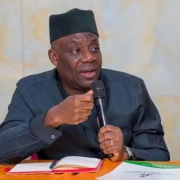
President Bola Tinubu has pledged continued support for the development of Nigeria’s tourism and hospitality industry following a meeting with the Director-General of the National Institute for Hospitality and Tourism (NIHOTOUR), Aare Abisoye Fagade.

Fagade briefed the President on ongoing reforms in the tourism, hospitality and travel sectors, particularly efforts to strengthen professional standards, develop skills and implement the NIHOTOUR Act 2022.

The reforms are aimed at improving service delivery, accountability and the competitiveness of the industry.

During the engagement, Fagade presented Tinubu with the Grand Fellow of National Hospitality and Tourism Award (GFNHT), described as the highest honour in Nigeria’s tourism sector.

The President’s pledge highlights the role of tourism in economic diversification, job creation, investment and enterprise development.

Speaking on the significance of the meeting, Fagade said tourism should be seen not only as a leisure activity but also as an economic sector capable of creating jobs and contributing to national prosperity.

Read Also: Tiwa Savage Reacts as Peller and Jarvis Ask Her to Be Godmother to Their Unborn Child

He said NIHOTOUR’s reforms were designed to strengthen professional competence, improve industry standards and establish a credible regulatory environment to support business growth and investment.

“Our responsibility is to build the professional and institutional foundations that will enable Nigeria’s tourism potential to translate into jobs, investment and sustainable economic growth. The President’s continued support is important to advancing these reforms and positioning the sector for greater national impact,” Fagade said.

The engagement is expected to support economic diversification, create jobs and promote productive non-oil sectors, including tourism and hospitality.

NIHOTOUR reaffirmed its commitment to working with government and private-sector stakeholders to build a more professional, competitive and globally recognised tourism industry that delivers lasting value to Nigerians.

Braima Calls for More Scholarships for Nigerian Students

Nigeria’s Ambassador to Hungary, His Excellency, Abass Braimah, has called for an increase in the number of scholarship slots allocated to Nigerian students under the Stipendium Hungaricum Scholarship Programme.

Ambassador Braimah made the call during a working visit to the headquarters of Tempus Public Foundation in Budapest, the Hungarian capital. He was accompanied by the Deputy Head of Mission and Minister Plenipotentiary, Mrs. Vivienne Ekwora Ogonyi.

He was received by the Director-General of the Foundation, Mr. Péter Tordai, and the Director of Study in Hungary, Ms. Orsolya Jánosik.
The meeting focused on ways to strengthen educational cooperation between Nigeria and Hungary, especially through the Stipendium Hungaricum Programme which offers Nigerian students the opportunity to study in top Hungarian universities.

Read Also: 2027: Bullying Won’t Stop Our Support for Tinubu, Cubana Chief Priest Declares

Ambassador Braimah noted that the current allocation of 50 slots to Nigeria is too small for a country with such a large population. He appealed to the Foundation to consider increasing the number to allow more qualified Nigerians to benefit.

He also encouraged eligible Nigerians to take advantage of the programme when the application window opens in November 2026.
The visit is part of the embassy’s ongoing efforts to deepen bilateral relations between Nigeria and Hungary and to support Nigerian students studying in Hungary.

Mwanga Africa Reopens, Sets Sights on Global Luxury Lifestyle Market

Nigerian fragrance and lifestyle brand, Mwanga Africa, has reopened under its founder, Omoyeni Disu, with a renewed focus on building a premium African lifestyle brand capable of competing in international markets.

The brand, which is built around fragrance, flowers and beautiful spaces, is returning with a broader proposition that goes beyond individual products to focus on creating experiences centred on scent, beauty, design and atmosphere.

For Disu, the reopening represents more than the return of a retail business. It marks a new chapter in her effort to transform Mwanga Africa into an enduring African lifestyle brand with global ambitions.

“I wanted to create more than just a beautiful store. I wanted to create an experience, somewhere you walk into and immediately feel good,” Disu said.

Mwanga Africa was founded from a deeply personal experience in Disu’s life. During a difficult period, she sought ways to create happiness and comfort and eventually channelled that experience into a business built around scent and beautiful environments.

The brand adopted the philosophy, “Creating happiness one scent at a time,” with its name, Mwanga, meaning “light.”

According to Disu, the concept has since evolved beyond fragrance to encompass the wider experience of how people live and interact with their surroundings.

The renewed brand is expected to place greater emphasis on product quality, design, packaging, retail experience and storytelling as it seeks to differentiate itself within the premium consumer market.

Disu said her entrepreneurial journey has also changed her understanding of success. While achievement and visible progress once played a significant role in how she measured success, she now places greater emphasis on purpose, relationships, rest, faith, creativity and meaningful work.

That evolution is also influencing her vision for Mwanga Africa.

Rather than presenting the company simply as a fragrance business, Disu wants it to develop into an African lifestyle brand that can enter international markets without losing its identity.

She believes African identity can remain central to a business while meeting global expectations for quality, design and customer experience.

The company’s ambition comes as a growing number of African businesses expand beyond essential services and increasingly explore sectors driven by culture, creativity, identity and consumer experiences.

Mwanga Africa hopes to position itself within that emerging space, where fragrances, flowers and lifestyle products form part of a broader proposition around beauty and intentional living.

Read Also: BBNaija Star Tochi Warns Women Against Early Marriage, Urges Them to Build Their Lives

For Disu, the meaning of Mwanga has also expanded from its original connection with her personal journey. The concept now represents happiness, possibility, beauty and the ability to create something meaningful from difficult experiences.

Her evolving views on women, leadership, African luxury and intentional living are also increasingly reflected in the philosophy behind the business.

“The woman I am becoming and the business I am building are beginning to reflect each other,” she said.

However, taking the brand beyond Nigeria will require more than a compelling founder story. Mwanga Africa will have to maintain consistent product quality, build efficient operations, deliver a strong customer experience and establish a distinctive identity that can compete for attention in international markets.

Disu said she hopes the company’s growth will also demonstrate that African businesses can develop their own standards of beauty, quality and luxury while remaining rooted in their origins.

The founder further hopes Mwanga Africa’s journey will inspire other Africans to turn creative ideas into sustainable businesses.

With its reopening, the company is therefore entering a new phase — one focused not simply on returning to where it stopped, but on building a more durable business with ambitions beyond the Nigerian market.

Edo Monarch’s Ex-Wife Pleads for Access to Children, Alleges Bullying and Oppression

Ese Jane Edojawene, who identified herself as the former wife of the King of Ubiaja in Edo State, has publicly appealed for access to her children, alleging that they have been separated from her following her reported split from the monarch.

Edojawene made the emotional appeal in a video shared on Facebook, where she claimed that the monarch took their children away from her and left them in the village under the care of his mother while he remained in Benin City.

According to her, she became particularly concerned after the children allegedly failed to return to school following the resumption of academic activities.

“School has resumed. My children are not in school. You are not concerned. You left these children with your mother in the village while you stay in Benin City with Joshua,” she said in the video.

Edojawene also pleaded for an opportunity to communicate with her children and establish how they were doing.

“Let me talk to my children. I want to see my children. I want to know how they are faring,” she said.

Read Also: Faith Akinola’s ‘The Letter’ Set for September 26 Premiere

She further alleged that the monarch had been bullying and oppressing her, which she attributed to the difference in their financial circumstances.

“I know he has money. He has been bullying me. He has been oppressing me,” she alleged.

At one point during the video, Edojawene became visibly emotional and said, “I am depressed,” while describing the situation surrounding her children.

Her allegations have generated reactions across social media, with some users calling for the monarch to publicly respond to the claims and provide his account of the circumstances surrounding the children.

Some commenters questioned aspects of Edojawene’s account, while others urged caution and said both sides of the dispute should be heard before conclusions are reached.

One Facebook user, Shedrach Aniekan, wrote, “We need to hear from the King.”

Another commenter, Emmanuela Chidinma Obi, suggested that children are sometimes separated from their mothers because of disputes between the adults, while Daniels Akpebuje questioned parts of the report and claimed that the monarch resides in Ubiaja rather than Benin City.

Other reactions focused on Edojawene’s past relationship and circulated unverified claims about her personal life.

The social media discussion has continued to attract attention, but the allegations made by Edojawene have not been independently verified. The monarch has also not publicly responded to the claims in the material available at the time of reporting.

The circumstances surrounding the children, including their current living arrangements and schooling status, remain unclear pending responses from the parties involved.

BBNaija S11: Abi Speaks on Emotional Struggles, Feeling Targeted in House

Big Brother Naija: Show Ya Sef housemate, Abi, has opened up about the emotional challenges she faced during her time in the house.

Abi was evicted during Live Show 7 on September 13, 2026, becoming the eighth housemate to leave the reality show.

In an exclusive post-eviction interview, Abi said her emotional nature became difficult to manage in an environment where housemates were constantly challenging one another. “I think it’s like just being with someone that is very emotional like me, and being in a safe space, and then going into the house where like everyone was just ready to tear you apart and bring you down and everything,” she emphasised.

Read Also: Phyna, Nkechi Blessing Take Social Media Clash to Boxing Ring

Abi also explained why she sometimes felt targeted in the house. She said she often found herself having to defend or explain her comments whenever she spoke. “It felt like anytime I said something, there was always someone ready to counter it, ready to let me know, ‘No, it’s not like that,’” she added. “And then I just found myself always explaining myself.”

She said she eventually stopped trying to convince everyone to understand her actions. “After a while, I was just like, ‘You know what? Forget about it.’ Anybody who thinks I did something, yes, I did it, and now what?” she said. Abi also spoke about the attention she received for her appearance, saying her idea of beauty is about being herself rather than following trends.

“I think for me, beauty, I would say, is just Abi,” Abi explained that she often thinks about whether her younger self would be proud of who she has become. “If a younger me saw me, would she want to be me? And the answer is always yes,” she noted.

Breaking: Veteran Nollywood actor Olu Jacobs has died at the age of 84

The death of the celebrated actor and film executive was announced by his family on Wednesday, September 16, 2026.

Jacobs’ wife, veteran actress Joke Silva, and their son, Olusoji Jacobs, shared the announcement through social media.

The family described the late actor as “The Lion of Lufodo” while appealing to bloggers and social media influencers to respect their privacy during the mourning period.

Olu Jacobs, whose full name was Oludotun Baiyewu Jacobs, was born on July 11, 1942.

He trained at the Royal Academy of Dramatic Art in London and went on to build a career across theatre, television and film.

Read Also: Nigerian Comedian Mr Macaroni Speaks On Why He Won’t Enter Politics

Before becoming a major figure in Nollywood, Jacobs appeared in British television productions and international movies, establishing himself as a versatile performer.

His return to Nigeria saw him become one of the country’s most respected actors, with a career that lasted for decades.

Jacobs received several recognitions for his contribution to the Nigerian and African entertainment industries.

Among his honours was the Member of the Order of the Federal Republic, MFR, which he received in 2011.

He also received the Industry Merit Award at the Africa Magic Viewers’ Choice Awards.

As an actor and film executive, Jacobs played a significant role in the development of Nigeria’s screen industry and inspired younger generations of performers.

He is survived by his wife, Joke Silva, children and grandchildren.

His passing has brought an end to the career of one of Nollywood’s most prominent veteran actors, whose body of work crossed generations and entertainment platforms.

Adeyanju Calls For State Of Emergency Over Fake Drugs In Nigeria


Human rights lawyer and activist Deji Adeyanju has called on President Bola Tinubu to declare a state of emergency over the proliferation of counterfeit and substandard drugs and consumer products in Nigeria.

Adeyanju also urged the President to remove the Director-General of the National Agency for Food and Drug Administration and Control (NAFDAC), Prof. Mojisola Adeyeye, alongside the heads of other regulatory agencies, including the Standards Organisation of Nigeria (SON).

In a statement issued in Abuja, Adeyanju said the growing circulation of fake and substandard products required urgent government intervention and a comprehensive review of Nigeria’s regulatory framework.

The lawyer alleged that NAFDAC had not done enough to effectively curb the spread of counterfeit medicines and other unsafe products. He expressed similar concerns about SON and other agencies responsible for protecting consumers.

Adeyanju said Nigerians were being exposed to potentially dangerous products on a daily basis, ranging from medicines to other consumer goods.

He also raised concerns about reports of medicines being sold wholesale in open markets and exposed to excessive heat.

“No responsible government should expose its citizens to such risks and expect mortality rates not to rise,” he said.

Read Also: Kunle Remi Shares How Fatherhood Has Reshaped His Perspective On Life

Adeyanju argued that the situation demonstrated weaknesses in regulation and enforcement and called on the Federal Government to take decisive action.

He urged Tinubu to replace the leadership of agencies he believes have failed to adequately protect consumers and appoint officials capable of strengthening monitoring and enforcement.

“The President must be alive to his responsibility and act decisively by removing the Director-General of NAFDAC and the heads of other failed regulatory agencies, including SON,” he said.

He further called for a comprehensive review of the country’s regulatory system, saying stronger mechanisms were needed to prevent counterfeit and substandard products from reaching consumers.

Adeyanju maintained that the Federal Government should treat the issue as a national emergency because of its potential implications for public health.

“Nigerians cannot continue to pay with their lives for regulatory failure,” he said.

His comments come amid renewed scrutiny of counterfeit and substandard products in Nigerian markets. NAFDAC has continued to report seizures and destruction of suspected counterfeit, expired and unwholesome regulated products, while concerns over product safety remain a subject of public debate.

Immigration Processes Over 2,296 Passport Applications at UK Centres in One Week

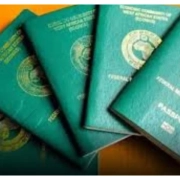
The Nigeria Immigration Service (NIS) has processed 2,296 passport applications within the first six operational days of its Special Passport Intervention Exercise in the United Kingdom.

The exercise, which commenced on September 7, 2026, is being conducted at special intervention centres in London and Manchester to address the passport needs of Nigerians living in the UK.

According to the NIS Public Relations Officer, Deputy Comptroller of Immigration Akinsola Akinlabi, the initiative has recorded a sustained turnout of Nigerians with confirmed appointments.

Akinlabi disclosed in a statement that 587 applicants were processed at the London Centre, while the Manchester Centre handled 1,709 applications during the period under review.

He provided the daily figures as follows: 245 applicants were processed on September 7, 401 on September 8, 396 on September 9, 429 on September 10, 406 on September 11 and 419 on September 12.

The Comptroller-General of the NIS, Kemi Nanna Nandap, also visited the two centres as part of efforts to monitor the exercise and ensure efficient service delivery.

Akinlabi said Nandap’s working visit was aimed at assessing the operation firsthand, engaging with members of the Nigerian community and identifying ways to ensure applicants receive seamless passport services.

Read Also: Basketmouth Celebrates Birthday, Reflects on His Journey Through Life

The NIS spokesman said the intervention exercise would continue at the London and Manchester centres, assuring applicants with confirmed appointments that they would be attended to.

He added that passport production and dispatch had already commenced for applicants who had been successfully enrolled, with the process progressing steadily.

The immigration service expressed appreciation to Nigerians in the United Kingdom for their patience, understanding and cooperation throughout the intervention exercise.

Akinlabi urged applicants to continue working with immigration officials at the centres to facilitate a smooth and efficient process.

The special intervention exercise is part of efforts by the NIS to improve access to passport services for Nigerians abroad and address the challenges faced by applicants seeking to obtain or renew their travel documents.

The service said it remained committed to delivering responsive and efficient services throughout the duration of the exercise.

Can Nigeria’s Education System Survive the Growing Attacks?

The International Day to Protect Education from Attack, marked around the world on September 9, chose a theme this year that reads almost as a direct question to Nigeria: “Can education survive attack? The resilience of human communities.” The United Nations says more than 8,500 attacks on schools, students and teachers have been recorded globally over the past two years, and Education Cannot Wait, the UN’s global fund for education in emergencies, warns that 258 million children across 87 countries now face severe disruption to their learning because of insecurity and conflict. Nigeria did not invent this crisis, but few countries illustrate its full arc as completely, or as painfully, as ours does.

The country’s own numbers, drawn from Human Rights Watch and Amnesty International reporting on the peak years of the Boko Haram insurgency between 2009 and 2015, describe an assault on education sustained enough to qualify as a deliberate campaign rather than a series of isolated incidents. More than 910 schools were destroyed or severely damaged, and at least 1,500 were forced to close entirely across Borno, Yobe and Adamawa states.

At least 611 teachers were killed for the offence of teaching, and more than 19,000 fled their communities rather than risk the same fate. The 2014 Chibok abduction, in which more than 270 schoolgirls were taken from their dormitory in a single night, became the incident the world remembers, but it was one entry in a much longer ledger of school raids that stretched across Niger, Zamfara, Kaduna and Kebbi states in the years that followed.

What should trouble Nigerians most about this year’s commemoration is how little that pattern has actually changed since Chibok, despite more than a decade of pledges to prevent its recurrence. Between 2021 and 2026, a fresh wave of mass abductions swept through the country’s north-west and north-central states, driven now by criminal bandit networks operating alongside the lingering insurgency in the north-east.

In March 2024, gunmen abducted 287 students and teachers from a school in Kuriga, Kaduna State. In November 2025 alone, 25 female students were taken in Kebbi State, and more than 300 students and teachers were seized from St Mary’s Catholic School in Papiri, Niger State, in a single raid. Further attacks stretched into 2026 across states as far apart as Borno and Oyo, the latter a reference this newspaper does not make lightly, having welcomed the rescue of 44 pupils and teachers from Orire, Oyo State in July after a fifty-six-day siege.

Read Also: First Lady Oluremi Tinubu Honours N10m Promise to 12-Year-Old Ogun Artist

We said then that a rescue, however well executed, is not a substitute for prevention, and the events chronicled around this year’s commemorative day confirm that warning was not excessive caution. It was a description of exactly the pattern Nigeria has continued to live through.

The First Lady, Senator Oluremi Tinubu, marked the occasion with a message describing the classroom as “where potential is discovered, dreams take root, and hope is nurtured,” and calling on Nigerians to unite in protecting schools, teachers and every child’s right to learn safely. We do not doubt the sincerity behind those words, and a message of this kind from the country’s highest-profile advocate for children carries genuine value in keeping the issue in public view.

Sadly, the Safe Schools Initiative which was launched after the Chibok school girl’s abduction with international backing and considerable fanfare, promised exactly the kind of protection this year’s commemoration is once again calling for. A decade on, with Kuriga, Kebbi, Papiri and Orire all added to the same ledger Chibok opened, Nigerians are entitled to ask what became of that initiative’s promise, and why a programme launched with such urgency has not prevented the same crime from recurring at this scale, in different states, year after year.

This is not only a security failure. It carries a demographic cost this newspaper has flagged before, most recently when marking World Population Day, when we noted that Nigeria accounts for close to a fifth of the world’s out-of-school children, concentrated heavily in rural and conflict-affected communities. The connection between that statistic and the pattern of school attacks documented here is not incidental.

Parents in regions repeatedly targeted by kidnappers make a rational calculation when they choose not to send a child to school, and no enrolment campaign, however well funded, can out-argue a parent’s fear for their child’s safety. Nigeria cannot meaningfully close its out-of-school children gap while school attacks remain a recurring feature of life in its north-west, north-central and north-east alike.

The global installation UNESCO, Qatar and the Education Above All Foundation unveiled in Paris this week, a visual record of the surge in attacks on schools worldwide, exists to make an abstract crisis visible to audiences who might otherwise never encounter it.

Nigeria does not need an installation to see its own version of that crisis. It has lived inside it for seventeen years, through governments of different parties and different security chiefs, each of whom inherited the same unresolved failure from the one before.

What the country needs now is a national school security framework with a published budget, a genuine multi-year commitment that outlasts the news cycle each attack generates and survives whichever administration happens to be in office when the next one occurs, and an honest public account of what happened to the Safe Schools Initiative’s original promise more than a decade after it was launched with such confidence. The theme of this year’s commemoration asks whether education can survive attack. Nigeria’s answer, seventeen years and thousands of kidnapped children after Chibok, cannot keep being another message of resolve. It has to be a policy that finally holds.

19-Year-Old Pleads For Father’s Release After Alleging Years Of Sexual Abuse

Ugo Rejoice, a 19-year-old woman has spoken out against the incarceration of her father, Uche Didie, after accusing him of sexually abusing her over several years in Lagos.

Ugo said the alleged abuse began in 2019, when she was 12, and continued until she disclosed it on Sept. 6, 2026.

She said the incidents occurred once or twice a month and that her father threatened her not to talk about them.

“I have been having sexual intercourse with him since 2019. I never had a boyfriend. “My dad is the only man who’s had sex with me,” she said.

She said that Didie raped her and threatened to beat her anytime she thought of informing anyone.

“He did not convince me; he forced himself on me. He would always tell me not to tell anybody and he will beat me if I tell anybody. “Sometimes he bought me gifts too,” she said.

Ugo said her mother was told about the alleged abuse beforehand, and she asked Didie about it but he said no.

Finally, she confided in a close friend, the son of their pastor. The matter was then brought to the notice of the pastor.

The OPC members arrested Didie and handed him over to the Police Tactical Unit at Araro, Ikorodu.

He was later moved to the Gender Unit headed by ACP Oluwatoyin Kazeem.

Read Also: Aaron Rodgers Claims Shailene Woodley Wanted Another Man After Accepting His Proposal

Ugo said she wanted the alleged abuse to end but was not seeking her father’s imprisonment because of the possible effect on the family.

“I know my dad should be arrested, but I don’t want that because I don’t want it to affect our future. “I am his second child,” she said. “There are three of us, two girls and a boy.”

She said she would rather leave her parents’ home and stay with her grandmother at Agege or her aunt at Egbeda.

“I wanted it to stop, I want him to be released, but I will stop living with my parents. “I’ll go to my grandma in Agege or my auntie in Egbeda,” she said.

However, Didie gave a different version in a video, denying Ugo’s claim that the alleged abuse started in 2019.

WHAT SHE SAID ONLY STARTED IN 2026, HE SAID.

I’m going to start doing it this year, I’m going to start fucking it this year, my daughter Rejoice. “The time the mama ask me that time, e never happen,” he said.