Yemi Solade: Yoruba Filmmakers Pioneered Nollywood

Seasoned actor Yemi Solade has reignited the conversation on the origins of Nigeria’s film industry, insisting that Yoruba filmmakers laid the foundation for Nollywood long before it became a national brand. NigeriaTravel Guides

In an interview with Feel Right News TV, Solade said the contributions of Yoruba practitioners have been downplayed and that it was time to ‘set the record straight’.

The actor argued that movie-making in Yorubaland predates the term ‘Nollywood’ and cited early practitioners as proof.

“We’ve been acting in Yorubaland before Nollywood started; even Nollywood, we started it. I cannot watch and let anyone undermine my tribe, because others not talking doesn’t mean I shouldn’t talk”, he said.

Read Also: Iyabo Ojo Breaks Silence on Family Attacks, Says She Has No Regrets

“People like Muka Ray, Peju Ogunmola and co were born into this and acted since they were small; they started before me too.

“Yoruba people started making movies before any tribe in Nigeria. It’s a fact; facts don’t care about emotions”, Solade added. NigeriaTravel Guides

He also blamed the media for skewing the narrative: “The press caused this; they only go to English movie makers to ask questions. My people don’t really care about these things, but we need to set the record straight.”

Solade used the discussion to clarify his standing in the industry, referencing veteran actor Pete Edochie.

“Pete Edochie is my senior by age. If he enters this place now, I will go down to greet him, but I am senior to him in this industry,” he said.The actor, who in a 2025 video said he has spent 48 years in the profession, added that respect for elders does not erase industry hierarchy.

“Jide Kosoko cannot start talking now, and I’ll talk back to him when it comes to the industry,” he added.

Solade said his goal was not to diminish others but to ensure Yoruba cinema gets its due recognition in the history of Nigerian filmmaking.

Iyabo Ojo Breaks Silence on Family Attacks, Says She Has No Regrets

Nollywood actress Iyabo Ojo has broken her silence on persistent online attacks targeting her family, attributing the criticism to her activism and declaring that she has “no regrets”.

In a lengthy statement posted on Instagram on Wednesday, the actress urged members of the public to demand evidence from anyone making allegations against others rather than being misled by unsubstantiated claims.

“Anyone who alleges must prove. No one is above the law. Don’t be deceived. The law and justice will take their full course,” she wrote.

Ojo also cautioned against what she described as online manipulation, urging social media users to scrutinise claims made by people who allege that they have evidence without presenting it for public verification.

“It’s 2026. Please stop believing anyone who comes online to manipulate grown adults like you… Saying ‘I have proof, I have evidence’ without ever showing or posting the evidence for you to verify for yourself,” she said.

The actress said her public identity had always extended beyond acting and entertainment, stressing that activism had been an important part of her life.

“I have never been just an ordinary actress or celebrity,” Ojo said, noting that her activism has been central to her public life.

She maintained that she had no regrets about her activism despite the criticism and attacks directed at her and her family online.

“I have NO regrets. I repeat, I have NO regrets helping and fighting for those I fought for. If I had the opportunity to do it again, I would. I just no longer bring it to social media,” she stated.

Read Also: Varsities Face Fresh Crisis as Lecturers Lament Unpaid Salary Shortfalls

“All this noise these miscreants call ‘attacks’ is a result of my activism. And I honestly have no regrets because I have stood on the right path.”

The actress credited her faith for her resilience: “1 with God is a majority, and my confidence lies solid in Him. No one is bigger than God, so that no one can rewrite my story or my kids’ story. No matter how hard they plot, curse, defame, manipulate, twist and bark. My family and I are God’s chosen.”

Addressing concerned supporters, Iyabo said her family remains blessed and progressive despite the criticism.

“To all those- our amazing fans and loved ones who are truly worried- please be at peace. God is in control. His blessings in our lives are a testament to His grace, greatness, celebration, and protection. We have continued to progress, and my family and I will continue to do so in God’s likeness and glory.”

She also dismissed claims that she shares false information online: “Please let me be very clear: There is NO WAY — I repeat, NO WAY — we would ever post anything on social media that is fake. It’s a public notice. You can verify it if you are in denial. Know that. And know peace.”

Varsities Face Fresh Crisis as Lecturers Lament Unpaid Salary Shortfalls

FG Blames Universities For Pay Rise, ASUU President Speaks

BY HENRY TYOHEMBA, Abuja, FRANCIS OKOYE, Maiduguri, ABU NMODU, Minna, ACHOR ABIMAJE, Jos, PATRICK OCHOGA, Benin, ANAYO ONUKWUGHA, Port Harcourt, ADEBAYO WAHEED, Ibadan, SAMUEL ABULUDE, Lagos, JOSUA DADA, Osogbo, FEMI OYEWESO, Abeokuta

Fresh concerns are emerging across the federal university system on the implementation of the 40 per cent salary increase for university lecturers, with some institutions unable to pay the full salary package.

The development, which followed the agreement between the federal government and the Academic Staff Union of Universities (ASUU) on the increase about eight months ago, has made some universities to stop payment they initially commenced, citing lack of funds.

Findings across some federal universities revealed that institutions that had started to implement the increment were forced to suspend it because their Internally Generated Revenue (IGR) could no longer bear the additional wage bill.

Top ASUU officials told our correspondents that after the federal government and the union signed the renegotiated agreement on January 14, 2026, with the 40 per cent upward review of academic staff remuneration backdated to January 1, the government directed universities to source the increase from their IGR.

But the ASUU officials could not produce the alleged memo from the federal government directing universities to do so.

The federal government announced on Feb. 1 that it was starting to roll out the increase and told federal universities to factor the new salaries into their payroll systems. Nevertheless, implementation has been uneven.

Some universities had not fully implemented the increment by August and others who had started paying it had stopped. The development has compelled ASUU branches to issue ultimatums and insist on the implementation of the agreement.

Most university managements contacted refused to state reasons for the shortfalls.

Senior officials of ASUU also expressed surprise at how vice-chancellors of institutions that have continued to pay their lecturers in full managed to sustain the payments, despite the funding challenges.

How UNIBEN Dumped Half Salaries

Although some universities were rumored to have been having payment problems since May, the issue remained largely out of the public domain until ASUU branch of the University of Benin (UNIBEN) raised the alarm on Monday.

There is anxiety in UNIBEN over academic activities as lecturers were paid half of their August salaries, while non-academic staff were said to have gotten their full salaries.

Sources at the university said the payment did not include the usual allowances and this had left many lecturers, especially those servicing loans taken out through the university, distressed.

In a notice to members, the UNIBEN ASUU chapter said it had met with the university management on the development and advised members not to panic.

The union has been assured by the university authorities that more salary alerts would be received,” the notice signed by the branch secretary, Dr L. O. Aimiyekagbon said.

But sources familiar with the matter said the university paid the August salaries from its IGR after the federal government failed to release its monthly subvention to the institution.

Yesterday, the branch chairman, Enaruna Edosa, said the executive committee would meet before calling a congress to decide the union’s response.

Speaking to Edosa said the members will ultimately determine the way forward.

“We are meeting as the executive committee now to discuss the matter, and afterward we will convene a congress where all members will participate and decide the way forward. “It is our members who will lead us,” he said.

When contacted, the university’s public relations officer, Dr Benedicta Ehanire, declined to comment, saying the ASUU leadership was better placed to speak on the matter.

The last time the academic staff of the Federal University of Technology (FUT), Minna, got the 40 per cent salary increase was in May.

The branch chairman of ASUU in the university, Prof. Lookman Oyewobi, said the development followed the directive of the federal government that universities should source the fund for the increment from their internally generated funds.

Read Also: Nigerian Influencer Ignored Doctor’s Advice Before Fatal Penis Enlargement Procedure

He said the management was able to absorb the additional salary component from January to May before it stopped the payment as it could no longer afford the cost.

He said the university’s IGR could not be diverted to sustain the salary increase as the funds were tied to services students were charged for specific purposes.

With no more federal money coming to the university to pay for the increase, he said, staff were getting more and more agitated.

He said FUT Minna was relatively better off, as the management had sustained the additional payment for five months, unlike many other universities that could not sustain it.

Lydia Legbo, the university’s head of Information, declined to comment further when asked if salaries had been paid, saying only, “Salary was paid.”

Union members at the University of Maiduguri in Borno State also received part of their salaries in August, ASUU chairman Mohammed Waziri told The Associated Press.

Waziri said that only 10 per cent of the Consolidated University Academic Salary Structure (CONUASS) and the professional allowance for members in veterinary and human medicine were not paid.

“The university has paid the salaries of members for June, July and August but the reimbursement from the federal government is still outstanding,” he said.

When contacted, the university’s public relations officer, Hajiya Amina Abdullahi, said the management was in a meeting and could not say when it would end.

She had not responded at the time of filing the report.

However, Prof. Idowu Keinde, the chairman of ASUU, University of Lagos (UNILAG) chapter challenged the assertion that the shortfall at UNIBEN was a consequence of the inability of the university to receive the federal allocation.

“It is not true that members of UNIBEN ASUU were paid half salaries because the university did not receive federal allocation. Those results should be well known. Now back to your question, we didn’t get our full salaries, in fact, no staff of UNILAG got theirs and it wasn’t because of federal allocations. “Our National Executive Committee has taken cognizance of this development and will deal with it,” he said.

The ASUU branch chairman at the Federal University of Agriculture, Abeokuta (FUNAAB), Dr Ola Olusegun Oyedele said the university did not pay the lecturers their full August salaries because the university did not include the Enhanced Academic Allowance (EAA).

He spoke in Abeokuta yesterday and said FUNAAB management had paid only three months of the eight months of the EAA arrears owed lecturers.

“The five-month bailout fund was released by the federal government, only two months was given to FUNAAB because we are a specialized university. That was the reason why the institution released the three-month EAA,” he added.

Minister’s Aide Calls On NUC To Investigate

The Federal Ministry of Education has ordered an investigation into the delay in the payment of August salaries of the National Universities Commission (NUC).

Ikharo Attah, the special adviser on Media and Communications to the Minister of Education, declined to comment on the situation at UNIBEN and the matter of half salaries, saying the question should be directed to the public relations officer of the university concerned and possibly the NUC.

OAU, UNIPORT, FUTA To Get Full Salaries

But reports of salary shortfalls are not consistent across the federal university system.

Prof. Al-Amin Abdullahi, zonal coordinator of ASUU and a lecturer at the Federal University, Lafia, said salaries were still being paid at his institution.

Read Also: Nigerian Influencer Ignored Doctor’s Advice Before Fatal Penis Enlargement Procedure

“I am at the university, Federal University of Lafia, and salary has been paid,” Abdullahi said.

But he said the Abuja Zone had no statistics to show the number of federal universities that might have experienced the same difficulty.

ASUU members at the University of Port Harcourt (UNIPORT) said they were not aware of any shortfall in the payment of lecturers’ salaries.

Prof. Emmanuel Ngoke, the university’s ASUU chairman, declined to comment on the issue but a senior ASUU official, who asked not to be named, said the union’s members in the university and its Owerri Zone had not received half salary.

“The University of Port Harcourt is in Owerri zone and we have not had any short payment of salaries among members of ASUU in the zone. “We have never seen such a thing before,” he said.

Lecturers at the Federal University of Technology, Akure (FUTA) in Ondo State also said they received their full August salaries.

The ASUU Chairman of the institution, Pius Mogaji, made this known in reaction to reports of half salary payments at UNIBEN.

He said the situation did not affect FUTA where lecturers had received their full salaries for August.

Besides, ASUU members at Obafemi Awolowo University (OAU), Ile-Ife, had been paid their salaries up to August 2026.

But the union’s chairman, Prof. Tony Odiwe said the federal government did not fail to cash-back the payments as agreed with ASUU.

“My vice-chancellor has managed to pay us our full salary up until August. I don’t know how he is doing it, but we are getting paid our salaries. ‘That is all I can say at this time,’ he said.

The chairman of ASUU, University of Jos (UNIJOS) chapter, Prof. Jurbe Joseph Molwus, also said that lecturers in the university had continued to receive their full salary package.

He stressed that the half salary situation was not the situation in UNIJOS, but said that the university’s ability to pay did not mean the federal government had remitted the needed funds.

“It is only the ingenuity of the present leadership of the university under Prof. “The full package of their salaries is not being funded and all the federal universities are suffering because of that,” he said.

As at the time this report was being filed yesterday, ASUU national president, Prof. Christopher Piwuna had switched off his mobile line and could not be reached for comment.

Nigerian Influencer Ignored Doctor’s Advice Before Fatal Penis Enlargement Procedure

A Bangkok cosmetic clinic has told Thai investigators that Nigerian content creator Igho “Tiny” Ubiribo chose to undergo a penis enlargement procedure in one session despite being advised by a doctor to have the treatment split into two sessions.

Ubiribo, a Nigerian influencer based in London, died on March 6, less than 24 hours after receiving hyaluronic acid injections at the Bangkok clinic, according to records from an inquest at Westminster Coroner’s Court previously obtained by PEOPLE.

At an inquest hearing on August 21, post-mortem and toxicology findings reportedly linked his death to the hyaluronic acid injection and a pulmonary embolism. Ubiribo had developed chest pains and collapsed on March 5, several hours after undergoing the procedure.
He was taken to a local hospital for a CT scan but lost consciousness before the examination could be conducted. Medical personnel reportedly performed CPR for 101 minutes before he was pronounced dead at 1:05am on March 6.
Thailand’s Ministry of Public Health announced on September 7 that it had opened an investigation into the clinic. The ministry said Health Minister Pattana Phromphat directed the Department of Health Service Support and the Food and Drug Administration to establish what happened and determine whether the clinic complied with required medical standards.

Read Also: Phamose Urges Digital Creators to Prioritise Originality at Lagos Seminar

According to Phuwadet Surakot, Director-General of the Department of Health Service Support, the clinic told investigators that Ubiribo had been receiving treatment there since 2024 and had undergone five penile enlargement injections.
Surakot said the clinic claimed a doctor advised Ubiribo before the March 5 procedure to divide the treatment into two sessions, but he requested that the injections be administered in a single session. The clinic also said he signed a consent form before each treatment and received aftercare instructions.

The authorities will now examine the clinic’s records and other evidence before deciding whether the case should be referred to the Medical Council. “We will gather all facts and evidence to proceed according to our authority and submit the case to the Medical Council for a ruling on professional practice standards, in order to ensure fairness to all parties,” the Ministry of Public Health said.

Phamose Urges Digital Creators to Prioritise Originality at Lagos Seminar

Young African content creators have been advised to develop original identities and avoid relying solely on trending content as the continent’s digital media space continues to expand.

The advice was given at an entertainment seminar in Lagos, where discussions focused on creativity, digital media and opportunities within the growing creator economy.

Speaking at the event, Cameroonian digital creator, Phamose, urged emerging creators to focus on consistency, originality and understanding online communities.
He also encouraged content creators to treat their work as a profession, noting the increasing involvement of brands and entertainment companies with digital creators seeking to reach younger audiences.

Read Also: Sexual Abuse: Yahweh Group Says Allegations Must Be Properly Investigated, Rejects Media Trial

The seminar brought together creatives, digital personalities and entertainment professionals to discuss changes in the media landscape and the growing role of online creators in shaping popular culture across Africa.

Phamose also shared his experience of building an audience through social media and discussed ways creators can expand their activities beyond individual social media platforms.

Sexual Abuse: Yahweh Group Says Allegations Must Be Properly Investigated, Rejects Media Trial

The Congregation of Yahweh, Lagos, has denied allegations of sexual abuse, harassment, maltreatment and other forms of misconduct levelled against its leadership and members by some former members of the church.

The congregation, in a statement signed by its Chairman, Assembly, Apst. Yehudah Nnedu, described the allegations as “false, malicious and unfounded,” insisting that the issues raised by the former members should be subjected to proper investigation rather than determined through social media publications.

The statement followed an interview circulated on YouTube, Facebook, WhatsApp and other platforms in which four former members of the congregation — Diuto Okwuonu, Ugomma Okwuonu, Amara Okwuonu and Susana Okwuonu — alongside their mother, Naomi Okwuonu, made allegations against the church, its General Overseer, members of her family and other members of the congregation.
The church said it was particularly concerned that the allegations were being circulated while a petition involving the parties was still under investigation by the Gender Unit of the Lagos State Police Command, Ikeja.

According to the congregation, it does not trivialise allegations of sexual misconduct, particularly where a child is involved, but maintained that the seriousness of an allegation should not be interpreted as proof of guilt.

“The Congregation of Yahweh categorically denies all allegations as false, malicious and unfounded,” the statement said.
On an allegation by Diuto Okwuonu of attempted sexual harassment and beating, the church said no member of its leadership had ever sexually harassed, made sexual advances towards or beaten her.

It described the allegation as fabricated, saying no such incident had previously been reported either within the church or to law enforcement authorities before the recent media campaign.

Responding to Ugomma Okwuonu’s allegation that she and two other sisters were sexually abused and “passed from one brother to another”, the church described the claim as “grievous, incestuous and highly defamatory.”

The congregation maintained that no male member of the church had any sexual relationship with Ugomma, adding that Brother Emmanuel was only betrothed to Susana Okwuonu.

It further alleged that the narrative was aimed at damaging Emmanuel’s marriage, faith and reputation, while insisting that its moral standards did not permit or institutionalise sexual misconduct.

On Amara Okwuonu’s allegation that the church’s General Overseer maltreated her and terminated her university education in Ghana following the annulment of her marriage, the congregation denied the claim.

It said the decision concerning her scholarship was not punitive but a collective family and institutional decision influenced by available resources, concerns over academic conduct and moral standards, as well as conditions attached to the institutional support.

The church also disputed allegations concerning Susana Okwuonu, whom it identified as the former wife of Brother Emmanuel.

According to the congregation, Susana allegedly left her matrimonial home and child for more than two years before returning to seek custody.

The church, however, stressed that the welfare and best interests of the child should remain paramount.

On the allegation involving Mrs Naomi Okwuonu’s employment with Union Bank, the congregation denied directing her to leave the bank.

It said her disengagement occurred during a period when the bank was undertaking staff rationalisation and downsizing, adding that decisions she subsequently made regarding her employment and pension benefits were personal decisions.

The congregation also accused the former members and their mother of engaging in what it described as continuous “false commentaries, insults, name-calling and videos” against the church, its General Overseer and her family.

It alleged that the activities had created tension within the community and claimed that one of the former members had been seen around the family residence with unidentified persons.

Read Also: Mike Bamiloye’s ‘Agbara Nla: The Return’ Hits Cinemas October 1

The church said the matter had been reported to the Festac Police Division, adding that it had preserved the allegedly defamatory videos, publications and social media posts for possible legal proceedings.

The Congregation of Yahweh also drew attention to what it described as years of assistance provided to the Okwuonu family.

It listed free accommodation, feeding and basic necessities, educational expenses, medical care and other welfare support among the assistance allegedly provided to the family.

It also claimed that the church facilitated an all-expenses-paid pilgrimage or trip to Israel for the family’s father.

The congregation said the history of assistance had been omitted from the allegations being circulated against it.

It maintained that members were free to leave the church but argued that departure should not be used as a basis for what it described as rewriting the history of the relationship between the family and the congregation.

The church said it had briefed its lawyers and was taking steps to protect the reputation and rights of its leadership and members.

It said it would consider appropriate civil and criminal legal action against persons responsible for what it described as false publications, as well as facilitators, publishers or platforms that continued to disseminate unverified allegations.

The congregation also called on all parties to preserve recordings, publications, social media posts and other materials relating to the allegations, saying they could become relevant evidence.

Mike Bamiloye’s ‘Agbara Nla: The Return’ Hits Cinemas October 1

Veteran cleric and Nigeria’s foremost Christian filmmaker, Mike Bamiloye, has announced that his much-anticipated remake, Agbara Nla: The Return, will hit cinemas nationwide on October 1. NigeriaTravel Guides

Bamiloye, founder of Mount Zion Faith Ministries, made the announcement on Instagram alongside the film’s official trailer poster.

The new project is described as a modern reimagining of the 1993 classic Agbara Nla, which shaped the early days of Nigeria’s Christian film industry more than three decades ago.

The original film was later released in English in 1994 under the title The Ultimate Power and gained wide acceptance across the country, particularly in the South-South and South-East regions, starting with Edo State.

The 1993 hit became a cultural and spiritual landmark.

Read Also: FULL LIST: Eight BBNaija Housemates Who Were Disqualified in the Show’s History

It focused on spiritual warfare, depicting the confrontation between good and evil through storylines involving witchcraft, occultism and demonic oppression.

Beyond the drama, the film emphasised core Christian values such as faith, prayer, evangelism, obedience and commitment in marriage and ministry.

According to the producers, the 2026 remake retains the original’s central message, the supremacy of God’s power over darkness, while updating the story for a new generation of viewers with improved production quality.

Agbara Nla: The Return is directed by Damilola Bamiloye and Joshua Bamiloye.

The cast features Philip Olubakin as Olaboye, Damilola Bamiloye as Kola, and Aanu Kolade-Abiodun as Bose.

Mike Bamiloye also returns to reprise his iconic role as Isawuru.

Mount Zion Film Productions, Sozo Films, and Circuits co-produce the film.

FULL LIST: Eight BBNaija Housemates Who Were Disqualified in the Show’s History

Big Brother Naija (BBNaija) has a zero-tolerance policy for violence, misconduct, and repeated disobedience. ApplyFor Auditions

Over 11 seasons, eight housemates have been asked to leave the house before eviction night.

With Nomy’s exit in Season 11, here is the updated list of disqualified housemates, starting with the most recent:

1. Nomy (Season 11, 2026)

Nomy is the latest housemate to be disqualified. She was asked to exit the house on Monday after refusing to wear the ‘benchwarmer’ outfit, which was given as punishment for coming last in the Head of House challenge. She was the only housemate who finished last. Big Brother cited repeated disobedience to house rules as the reason for her removal.

2. Faith (Season 10, 2025)

Faith was disqualified immediately after a physical altercation with housemate Sultana during a skincare task rehearsal. The fight left Sultana with a twisted ankle.

3. Beauty Tukura (Season 7, 2022)

Beauty was sent home for aggressive behavior. During an argument, she threw her wig and glasses at a fellow housemate. Her exit reinforced Biggie’s stance against physical misconduct.

4. Erica (Season 5, 2020)

Erica was disqualified for multiple rule breaches. These included the use of abusive language and repeated disrespect of house rules, despite several warnings.

BBNaija: ‘Prioritise steady income over fame’, Leo Da Silva advises ex-housemates
5. Tacha (Season 4, 2019)

Read Also: Former Catholic Priest Sandro Ferretto Marries Kenyan Woman in Traditional Ceremony

Tacha was removed from the house after a physical fight with Mercy Eke that involved pushing and hair-pulling. The incident became one of BBNaija’s most controversial moments. ApplyFor Auditions

6. Khloe and K-Brule (Season 3, 2018)

Both housemates were disqualified in the same season after accumulating three strikes. Their offenses included aggressive behavior and physical confrontations with other housemates.

7. Kemen (Season 2, 2017)

Kemen was the first major disqualification in BBNaija history. He was removed for sexually inappropriate touching of fellow housemate TBoss while she was asleep. The case set the precedent for how seriously Big Brother treats consent violations.

Since Kemen’s disqualification in 2017, Big Brother has maintained a strict code of conduct. Physical violence, sexual misconduct, aggressive behavior, and repeated disobedience have all led to instant removal.

Producers have repeatedly stated that the rules exist to protect housemates and maintain the integrity of the game.

With 13 housemates currently up for possible eviction this week, Nomy’s removal is a reminder that in the BBNaija house, conduct matters as much as popularity.

Former Catholic Priest Sandro Ferretto Marries Kenyan Woman in Traditional Ceremony

For years, the people of Kasiela and Mochongoi in Kenya’s Baringo County knew him as Father Sandro, the Italian-born Catholic missionary who stood at the altar, celebrated Mass and served the local community. This week, they saw him in a very different role: as a groom.

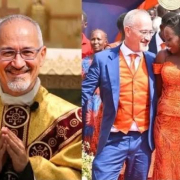
Former Catholic priest Sandro Ferretto has married Sharon Jepng’ok, a Tugen woman from Baringo South, in a traditional Koito ceremony in Seretion Village, Kasiela. In the same community, he once served as a parish priest.
Ferretto reportedly spent about 12 years serving as a missionary in Baringo before stepping away from active priestly ministry. His decision marked a dramatic change from a life defined by Catholic priesthood and celibacy to one centred on love, marriage and family.

The wedding has attracted attention not only because of Ferretto’s former religious status, but also because of the way he chose to formalise his new chapter.
Rather than simply marrying Sharon in a conventional ceremony, Ferretto embraced the cultural traditions of his bride, participating in the Tugen/Kalenjin Koito ceremony, a traditional marriage and family-union rite.

Read Also: Nigerian Professor Ibironke Odumosu-Ayanu Named Dean of Canadian Law College

Images and videos from the celebration show the former priest immersed in the customs of the community he once served as a missionary. His transformation from the man once known for his clerical robes to a groom participating in traditional rites has made the ceremony particularly striking.
The location is also deeply symbolic.
Seretion is not an unfamiliar place to Ferretto. It is part of the community where he spent years building relationships through his missionary work. Returning there as a husband gives his story an unusual circularity, he first arrived as a foreign priest serving the community and has now returned as a man becoming part of a local family.

His marriage to Sharon also represents a meeting of cultures: an Italian-born former missionary and a Kenyan Tugen woman coming together through a ceremony rooted in her heritage.

For the community, therefore, the celebration is more than a wedding.
It is a story of faith, personal choice, love, cultural identity and a new beginning.
The man once addressed as Father Sandro has entered a new chapter, this time not behind a pulpit, but beside the woman he chose to build a family with.
And in Seretion Village, the community that once knew him as its priest gathered to celebrate him as a husband.

Nigerian Professor Ibironke Odumosu-Ayanu Named Dean of Canadian Law College

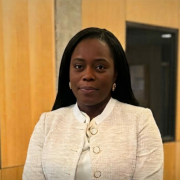
A Nigerian-born legal scholar, Dr. Ibironke Odumosu-Ayanu, has been appointed Dean of the College of Law at the University of Saskatchewan, Canada, marking another major milestone in her distinguished academic career.

Odumosu-Ayanu will assume the five-year position on October 1, 2026, succeeding Martin Phillipson, who completed two five-year terms as dean. She currently serves as Professor and Associate Dean of Research and Graduate Studies at the institution, where she has been a member of the faculty since 2008.

Her appointment was announced by Patti McDougall, Interim Provost and Vice-President, Academic at the University of Saskatchewan and chair of the search committee.

McDougall described Odumosu-Ayanu as an academic leader with a distinguished record of excellence, collaborative leadership and commitment to advancing research and graduate education.

Her academic journey began in Lagos, where she earned her Bachelor of Laws degree from the University of Lagos. She subsequently moved to Canada, earning an LLM from the University of Calgary and a PhD from the University of British Columbia.

At the University of Saskatchewan, she has built an international reputation through her scholarship in business and human rights, international investment law and natural resource governance.

Read Also: Fury Threatens to Abandon Joshua Fight, Calls for Usyk Trilogy

Beyond research, Odumosu-Ayanu has distinguished herself as a teacher and mentor, supervising graduate students in law and interdisciplinary programmes. Her contributions to teaching earned her the Provost’s College Award for Outstanding Teaching in 2012, while she received the USask InterD Advisor Award in 2026.

Her rise to the deanship is also a story of migration, adaptation and academic excellence.

In a February 2026 profile by the university, Odumosu-Ayanu recalled that she initially expected to pursue postgraduate studies in England. A scholarship opportunity at the University of Calgary instead took her to Canada, where she eventually built an academic career and made Saskatchewan her home.

Nearly two decades after joining USask Law, she is now set to lead the institution’s College of Law.

Her appointment represents not only a personal achievement, but also another notable example of Nigerian talent attaining senior leadership in global academia.

From Lagos to Saskatchewan, Dr. Ibironke Odumosu-Ayanu’s journey is a reminder that Nigerian excellence continues to find its place and make its mark on the international stage.