Nigerian Afrobeat star Seun Kuti has accused Afrobeats superstar Wizkid of stealing his longtime nickname “Big Bird.”
The claim came during a recent Instagram livestream, after a Wizkid fan (FC) urged Seun to drop “Big Bird” since Wizkid is popularly known as “Biggest Bird.”
Seun fired back, insisting he’s the original and telling the fan to advise Wizkid to be more creative instead.
He said:
“Wizkid stole my name. Tell your fave to be original. Why are you telling me to change my name? Sorry, I can’t change it. This name has been here since. Nah me first put am. I am not dragging it with anybody, please.”
“Wizkid stole my name. Tell your fav to be original. This name has been here since. Nah me first put am.”
— Seun Kuti says after an FC told him to change his name from “big bird kuti” cause Wizkid also bears “biggest bird.” pic.twitter.com/JI2mLcM1e8
Popular Nigerian gospel singer Bunmi Akinnanu, best known for her hit song “Omije Ojumi,” has passed away. She died on January 12, 2026, in a Lagos hospital after a prolonged battle with a serious leg ailment.
The sad news was confirmed by her family through a statement shared by fellow gospel artist Ayo Melody on Instagram: “With great sadness we announce the passing of Evangelist Olubunmi Akinnanu Adeoye (OMIJE OJUMI), who passed away on 12th January 2026 at a Lagos hospital in Nigeria.” Her death comes after months of public prayers and concern, especially following a widely circulated 2025 video from G.F. David Ministries in Ibadan showing her receiving prayers for her condition.
Bunmi began singing at age 10 and later left a career in banking to pursue gospel music full-time. “Omije Ojumi” became one of her most beloved tracks, resonating deeply with fans across Nigeria, and she released several other impactful songs over the years. She will be greatly missed by the gospel community. May her soul rest in perfect peace.
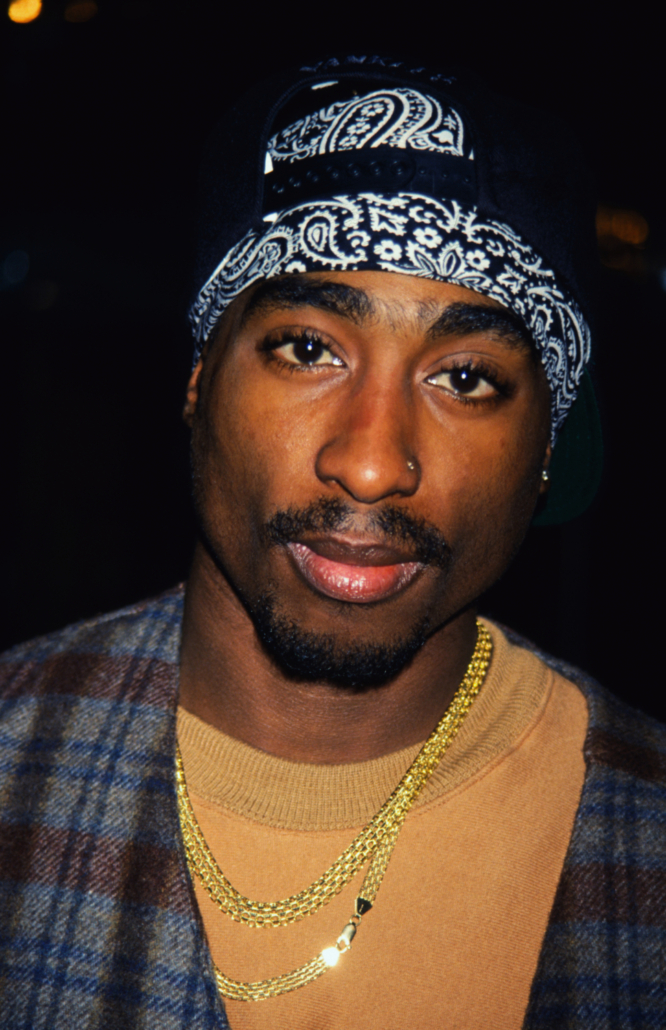
This is not just a look back at a man who made music. It is an exploration of a perspective that challenged the world, questioned the system, and demanded honesty from everyone who listened. To understand 2Pac is to see the world through his eyes, to feel the fire, the pain, and the hope that he carried, and to recognize why his voice refuses to fade. So, let’s check this out: who is 2Pac?
Tupac Amaru Shakur, popularly known as 2Pac, remains one of the most influential and complex figures in the history of hip-hop. Nearly three decades after his death, his voice still echoes through music, culture, and everyday social conversations across the world. 2Pac was not just a rapper. He was a poet, an activist, a deep thinker, and a reflection of realities many people preferred to overlook.
The Man Behind the Name
Born on June 16, 1971, in New York City, Tupac Amaru Shakur grew up surrounded by political awareness and social struggle. His upbringing exposed him early to issues of inequality, resistance, and identity. These experiences shaped the way he saw the world and, later, how he expressed himself through music.
Before his tragic death on September 13, 1996, Tupac had already established himself as a powerful cultural force. He balanced multiple talents as a rapper, actor, writer, and outspoken voice for the unheard. His life may have been short, but his impact was massive.
Why 2Pac Still Matters
2Pac did not make music simply to entertain. He made music to communicate truth. At a time when many artists stayed away from difficult conversations, he faced them directly. His lyrics spoke for marginalized communities, especially young Black Americans dealing with poverty, racism, police brutality, broken systems, and survival in harsh environments.
What made Tupac unique was his emotional honesty. He spoke about pain, anger, and injustice, but he also spoke about love, hope, loyalty, and self-respect. This balance between toughness and vulnerability made his music relatable and timeless.
Music That Shaped Generations
2Pac’s musical legacy remains unmatched. Albums like Me Against the World and All Eyez on Me are regarded as classics, not only in hip-hop but in global music history. With over 75 million records sold worldwide, his influence stretched far beyond awards and chart positions.
Songs like Dear Mama, Keep Ya Head Up, Changes, and Hail Mary continue to connect with listeners because the issues they address still exist today. His raw storytelling, poetic delivery, and fearless expression set a standard that many artists continue to chase.
Beyond Music: The Mind of 2Pac
Outside the studio, Tupac was deeply intellectual. He studied theater and poetry, read widely, and often referenced history, politics, and revolutionary ideas in his interviews and lyrics. His acting roles in films like Juice and Poetic Justice revealed his emotional depth and versatility, showing that he understood human struggle on many levels.
If you ever wonder who 2Pac is, it is because his presence refuses to fade. If you were not from the 90s, then you truly missed out on one of the greatest eras of music. His music speaks to new generations, his ideas continue to reflect modern social struggles, and his image represents truth, resistance, and emotional honesty in hip-hop.
In the end, 2Pac is remembered not just as a rapper, but as a cultural symbol. He was a revolutionary artist whose voice challenged the system, embraced humanity, and continues to speak long after the music stopped.
If 2Pac were still here, what would he say about the world we live in today?
Y’all still ain’t listening. That’s the real tragedy, you know what I’m saying? I been gone damn near thirty years and the same problems I was screaming about back in the day still got us trapped. Still got us dying. Still got us crying.
I see society today and I’m like, man, we got smartphones in every pocket, we got the whole world’s knowledge at our fingertips, but we ain’t got no wisdom. We got more ways to connect than ever before, but everybody feeling more disconnected. More isolated. More lost.
They got us fighting each other over politics, over race, over everything except the real issue, that the system still rigged against the poor. Black, white, brown, it don’t matter. If you broke, you invisible. If you rich, you untouchable. That’s the real game, and they keep us distracted so we don’t see it.
Police still murdering Black men in the streets. Still got badges that say they can do whatever they want. And yeah, now everybody got cameras, everybody recording, but what changed? We see the truth in 4K and still nothing happens. Still no justice. Just more hashtags and more funerals.
I look at these young brothers and sisters today, and I see the same pain I had. Same rage. Same feeling like the world don’t care if you live or die. They shooting up schools now, taking that pain and turning it outward because they don’t know what else to do with it. Nobody teaching them. Nobody showing them love. Just putting them in front of screens and wondering why they numb.
Social media got everybody performing, nobody being real. Everybody want the likes and the follows, but who really knows you? Who really sees you? We building these digital walls while our communities crumbling. We more concerned with our online image than the kid next door who ain’t ate today.
And don’t get me started on this wealth gap. Got billionaires going to space while teachers buying supplies out they own pocket. Got people working three jobs and still can’t afford a place to live. Got this whole generation crushed by student debt just trying to get educated. That’s not freedom. That’s a trap with better marketing.
But here’s what gives me hope, y’all still got that fire. I see it in the protests. I see it in the art. I see it in the young people refusing to accept the world as it is. That’s beautiful. That’s revolutionary. That’s what we need.
You gotta understand, change don’t come from the top down. Never has. It comes from us. From the streets. From the people who been suffering saying “enough.” From the mothers who lost sons demanding better. From the young ones who refuse to accept things the way they are just because that’s how they’ve always been.
I always said if we change the way we think, we can change the way we live. But first you gotta be real with yourself. You gotta look in the mirror and ask, what am I doing to make things better? Not just for me, but for my community? For the next generation?
We can’t keep waiting for politicians to save us. Can’t keep believing the system gonna fix itself. We gotta fix it. We gotta build something new. We gotta love each other harder than they hate us. We gotta organize. Educate. Elevate.
And to the young ones reading this, you ain’t alone. I know it feels like nobody understands your pain, but we out here. We been there. Use that anger. Channel that frustration. Turn it into something beautiful, something powerful. Write your truth. Paint your truth. Rap your truth. But most importantly, live your truth.
Don’t let them silence you. Don’t let them break you. Don’t let them make you think you don’t matter. Because you do. Your life has value. Your voice has power. Use it.
We all we got. Remember that. In a world that profits off our division, our unity is revolutionary. In a world that wants us numb, our consciousness is dangerous. In a world built on injustice, our demand for change is radical.
So stay woke. Stay angry at the right things. Stay loving the right people. And most importantly, stay fighting. Not with guns and violence, that’s what they want. Fight with knowledge. Fight with organization. Fight with love. Fight with art.
The revolution been televised, livestreamed, and shared a million times. But have we internalized it? That’s the real question.
I’ll end with this, find your purpose. Find what you’re meant to do in this world and do it with everything you got. Don’t let work, don’t let drugs, don’t let police, don’t let nothing stop you from finding your karma, your personal karma. When you do that, you’ll be good for this world.
We owe it to each other to get to the bottom of where we find ourselves. When everybody finds themselves and has harmony within, then we’ll have harmony in the world.
Until then, keep your head up. Keep fighting. Keep loving. Keep hoping. Peace.
If you stayed engaged, here’s my message to you: as an artist or creative, every day you wait is a day lost. Build, create, and inspire while you can. The world doesn’t need more noise; it needs your voice, your truth, and your contribution. Make it count before it’s too late.
https://teamhousetv.com/wp-content/uploads/2026/01/Brown-Joyful-Happy-Birthday-Templates-Poster-Made-with-PosterMyWall-1.jpg10801080TQuesthttps://teamhousetv.com/wp-content/uploads/2025/08/Favicon-300x101.pngTQuest2026-01-14 03:20:102026-01-15 07:29:49This world doesn’t need more noise; it needs your voice, your truth, and your contribution.
Nigerian artists once again proved their dominance on the continental stage at the 9th All Africa Music Awards (AFRIMA), which held its glamorous grand finale on Sunday night, January 11, 2026, at Eko Hotels and Suites in Lagos.
Rema stole the spotlight as the biggest winner of the evening, securing three major accolades: Artiste of the Year, Best Male Artiste in Western Africa, and Best African Artiste in RnB and Soul. The young star’s hat-trick highlighted his unstoppable rise and crossover appeal across Africa and beyond.
Burna Boy delivered a strong showing too, claiming Album of the Year for his 2025 release No Sign of Weakness. He also shared Best African Collaboration with Shallipopi for their hit track “Laho,” which independently earned Shallipopi the prestigious Song of the Year award.
Other standout Nigerian winners included Yemi Alade, who took home Best Soundtrack in a Movie, Series or Documentary for her song “You Are” from the animated series Iyanu. In the hip-hop realm, Phyno was recognized as Best African Artiste in African Hip-Hop.
From East Africa, Tanzania’s Juma Jux shone brightly by winning Best Male Artiste in Eastern Africa, adding to the night’s celebration of regional talent.
Among the rising stars, Qing Madi was crowned Most Promising Artiste of the Year, while Chella captured the hearts of fans everywhere to win African Fans’ Favourite.
The event, hosted in partnership with the African Union Commission and broadcast live to over 80 countries, underscored the vibrancy, diversity, and global impact of African music. Nigerian talent led the charge, reinforcing Afrobeats’ position as a powerhouse genre while spotlighting collaborations and emerging voices across the continent.
Below is the full list of winners:
Best Male Artiste – Central Africa
C4 Pedro (Angola)
Eboloko (Gabon)
Gims (DRC)
Gerilson Insrael (Angola)
Kocee (Cameroon)
L’Oiseau Rare (Gabon)
Fally Ipupa (DRC)
Magasco (Cameroon)
Singuila (The Congo) – Winner
Werrason (DRC)
Best Female Artiste – Central Africa
Anna Joyce (Angola)
Blanche Bailly (Cameroon)
Charlotte Dipanda (Cameroon)
Cindy Le Coeur (DRC) – Winner
Deborah Lukalu (DRC)
Emma’a (Gabon)
Jessy B (The Congo)
Krys M (Cameroon)
Liriany (Angola)
Rebo (DRC)
Best Male Artiste – Eastern Africa
Bien (Kenya)
Diamond Platnumz (Tanzania)
Element Eleéh (Rwanda)
Joshua Baraka (Uganda)
Jux (Tanzania) – Winner
Marioo (Tanzania)
Mbosso (Tanzania)
Bruce Melodie (Rwanda)
Sat-B (Burundi)
Yared Negu (Ethiopia)
Best Female Artiste – Eastern Africa
Abigail Chams (Tanzania)
Bridget Blue (Kenya)
Denise (Madagascar) – Winner
Haleluya Tekletsadik (Ethiopia)
Lady Jaydee (Tanzania)
Mahlet Wendimu (Ethiopia)
Salemia (Ethiopia)
Weeha (Ethiopia)
Winnie Nwagi (Uganda)
Zuchu (Tanzania)
Best Male Artiste – Northern Africa
A.L.A. (Tunisia)
Adviser (Mauritania) – Winner
Amr Diab (Egypt)
Cheb Momo (Algeria)
El Grande Toto (Morocco)
Hamza Namira (Egypt)
Lbenj (Morocco)
Mohamed Ramadan (Egypt)
Stormy (Morocco)
Wegz (Egypt)
Best Female Artiste – Northern Africa
Chirine Lajmi (Tunisia)
Inez (Morocco)
Jannat (Egypt)
Jaylann (Morocco)
Manal (Morocco)
Meryem Aboulouafa (Morocco)
Sherine (Egypt) – Winner
Zina Daoudia (Morocco)
Best Male Artiste – Southern Africa
Anderson Mário (Mozambique)
Jah Prayzah (Zimbabwe)
Manana (Eswatini)
Nasty C (South Africa)
Teddy Makadi (Malawi)
Tyler ICU (South Africa)
Wanitwamos (South Africa)
Yo Maps (Zambia) – Winner
Zeze Kingston (Malawi)
Kazba De Small (South Africa)
Best Female Artiste – Southern Africa
Babalwa M (South Africa)
Hanna (Zimbabwe)
Makhadzi (South Africa)
Nkosazana Daughter (South Africa)
Nontokozo Mkhize (South Africa) – Winner
Sha Sha (Zimbabwe)
Temwah (Malawi)
Tyla (South Africa)
Uncle Waffles (Eswatini)
Zee Nxumalo (South Africa)
Best Male Artiste – Western Africa
Asake (Nigeria)
Axel Merryl (Benin)
Black Sherif (Ghana)
Burna Boy (Nigeria)
Davido (Nigeria)
Didi B (Côte d’Ivoire)
Djodje (Cape Verde)
Rema (Nigeria) – Winner
VJ (Senegal)
Wizkid (Nigeria)
Best Female Artiste – Western Africa
Amaarae (Ghana)
Ayra Starr (Nigeria)
Djelykaba Bintou (Guinea)
Josey (Côte d’Ivoire)
Mariam Ba Lagaré (Mali)
Mia Guissé (Senegal)
Moliy (Ghana)
Tiwa Savage (Nigeria)
Viviane Chidid (Senegal)
Wendy Shay (Ghana) – Winner
Continental Categories
Best Male Artiste – African Inspirational Music
Christian Mukuna (DRC)
Djunny Beatz (Mozambique)
Gaise Baba (Nigeria)
Israel Mbonyi (Rwanda)
Jah Prayzah (Zimbabwe)
Joel Lwaga (Tanzania)
Kocee (Cameroon)
Lawrence Oyor (Nigeria)
Milo (Côte d’Ivoire) – Winner
Sjava (South Africa)
Best Female Artiste – African Inspirational Music
Ada Ehi (Nigeria)
Choisie Basolua (DRC)
Krys M (Cameroon)
Martha Mwaipaja (Tanzania)
Mercy Chinwo (Nigeria)
Morijah (Côte d’Ivoire) – Winner
Nontokozo Mkhize (South Africa)
Roseline Layo (Côte d’Ivoire)
Vestine & Dorcas (Rwanda)
Best African Artiste, Duo or Group – African Jazz
Adrian Younge & Ali Shaheed Muhammad (Ghana)
Haddinqo (Ethiopia) – Winner
Mádé Kuti (Nigeria)
Rorisang Sechele (South Africa)
Sibusiso Mash Mashiloane (South Africa)
The Cavemen (Nigeria)
Alune Wade (Senegal)
Nomfundo Xaluva (South Africa)
Kyle Shepherd Trio (South Africa)
Best Artiste, Duo or Group – African Contemporary
Fireboy DML (Nigeria)
Axel Merryl (Benin) – Winner
Espe Bass (Congo B)
Bien (Kenya)
Jaylann (Morocco)
Kizz Daniel, Angélique Kidjo & Johnny Drille (Nigeria)
Mbosso (Tanzania)
Ferre Gola & Rayvanny (DRC)
Didine Canon 16 (Algeria)
Wendy Shay (Ghana)
Best Soundtrack – Movie, Series or Documentary
Igho’le Trap Mix Version (To Kill a Monkey: Series) – Oscar Heman-Ackah (Ghana)
El Ma2as (The Start: Film) – Tamer Hosny, Reda Elbahrawy (Egypt)
You Are (Iyanu: Animated Series) – Yemi Alade (Nigeria) – Winner
Timpi Tampa (Timpi Tampa: Film) – Ismaël Lo (Senegal)
Tori Ife (Seven Doors: Series) – Tolu Obanro (Nigeria)
Saatte Ragouj (The Last of the Mohicans: Film) – Kafon (Tunisia)
Songwriter of the Year
Bakhaw Dioum – Choix (Mia Guissé ft. Wally B. Seck) (Senegal) – Winner
Emel, Jehanny Beth & Camille Berthomier – Fall in the Light (Tunisia)
Emma’a – Trop d’amour (Gabon)
Emmanuel Ayobami Alli-Hakeem – Za (Anendlessocean) (Nigeria)
Ferre Gola – Amour Illusoire (DRC)
Mohammed Ismail Sharrif – Rebel Music (Black Sherif) (Ghana)
Mugisha Fred Robinson – Tombé (Element Eleéh) (Rwanda)
“Isaka (6AM)” – Ciza, Jazzworx & Thukuthela (South Africa)
“Bengicela” – Mawhoo Gl Ceejay & Thukuthela (South Africa)
“Choix” – Mia Guissé (Senegal)
“Diplomatico” – El Grande Toto (Morocco)
“Kaay Waay” – VJ (Senegal)
“Laho” – Shallipopi (Nigeria) – Winner
“Ololufe Mi” – Jux & Diamond Platnumz (Tanzania)
“Push 2 Start” – Tyla (South Africa)
“Shake it to the Max” – Moliy, Shenseea, Skillibeng & Silent Addy (Ghana)
“With You” – Davido (Nigeria)
Best African Dance/Choreography
Jaylann – “Ha Wlidi” (Morocco)
Lady Ponce – “Je veux danser” (Cameroon)
Rebo – “Mobambo” (DRC)
Serge Beynaud – “Taper Dedans” (Côte d’Ivoire)
Toofan – “Deodorant” (Togo)
Tyla – “Push 2 Start” (South Africa)
Uncle Waffles & Royal Musiq – “Zenzele” (Eswatini)
Weeha – “Dimama” (Ethiopia) – Winner
Werrason – “Tout se paie ici bas” (DRC)
Wizkid – “Kese” (Nigeria)
Best African Act – Reggae, Ragga & Dancehall
Magasco – “Dirty Whine” (Cameroon)
Moliy, Shenseea, Skillibeng & Silent Addy – “Shake it to the Max” (Ghana)
Ruger & Kranium – “Dudu” (Nigeria)
Sean Morgan – “Vuu” (Malawi)
Black Sherif – “Rebel Music” (Ghana)
Takana Zion – “On My Eyes” (Guinea) – Winner
Tiwa Savage – “Forgiveness” (Nigeria)
Wakadinli – “Kum Baba” (Kenya)
Yemi Alade – “Baddie” (Nigeria)
Iyani, Mwanaa & Cedo – “Kifo cha Mende” (Kenya)
Best African Collaboration
Blanche Bailly & Lady Ponce – “Lève toi” (Cameroon)
Goon Flavour, Master Kg & Eemoh – “Ngishutheni” (South Africa)
Mia Guissé ft. Wally Seck – “Choix” (Senegal)
Moliy, Silent Addy, Skillibeng & Shenseea – “Shake It to the Max” (Ghana)
Paki Chenzu ft. Himra – “Assaut” (Togo/Côte d’Ivoire)
Shallipopi ft. Burna Boy – “Laho” (Nigeria) – Winner
Uncle Waffles ft. Cowboii, Royal Musiq, Uncool MC & Xduppy – “Zenzele” (Eswatini)
Davido ft. Omah Lay – “With You” (Nigeria)
Mawhoo, GL Ceejay & Thukuthela ft. Jazzworx – “Bengicela” (South Africa)
Benny Adam & Khadija El Warzazia – “Mok Ya Mok” (Morocco)
Most Promising Artiste of the Year
Cysoul (Cameroon)
Joshua Baraka (Uganda)
King Luca (Cameroon)
L’Oiseau Rare (Gabon)
Lwah Ndlunkulu (South Africa)
Massamba Amadeus (Senegal)
Qing Madi, Valorant (Nigeria) – Winner
Rym (Morocco)
Kunmie (Nigeria)
Fola (Nigeria)
Artiste of the Year
Amr Diab (Egypt)
Ayra Starr (Nigeria)
Burna Boy (Nigeria)
Davido (Nigeria)
DJ Maphorisa (South Africa)
El Grande Toto (Morocco)
Fally Ipupa (DRC)
Jux (Tanzania)
Rema (Nigeria) – Winner
Shallipopi (Nigeria)
Tyla (South Africa)
Breakout Artiste of the Year
Blaq Major (South Africa)
Ciza (South Africa) – Winner
Eboloko (Gabon)
Himra (Côte d’Ivoire)
Marioo (Tanzania)
Mawhoo (South Africa)
Moliy (Ghana)
Shallipopi (Nigeria)
Trap King (Algeria)
VJ (Senegal)
Best African Lyricist Rapper
ALA (Tunisia)
Didi B (Côte d’Ivoire) – Winner
Jessy B (Congo B)
Klassafan le Melangeur (Guinea)
Nasty C & Usimamane (South Africa)
Nyashinski (Kenya)
Reminisce (Nigeria)
Sarkodie (Ghana)
Switch (Libya)
Yacou B OG (Mali)
Best African Artiste, Duo or Group – African Hip-Hop
ALA ft. Mootjeyek (Tunisia)
Cassper Nyovest (South Africa)
Eboloko (Gabon)
El Grande Toto (Morocco)
Himra (Côte d’Ivoire)
Phyno (Nigeria) – Winner
Nasty C & Usimamane (South Africa)
Odumodublvck (Nigeria)
Sarkodie (Ghana)
Suspect 95 (Côte d’Ivoire)
Best African Artiste, Duo or Group – RnB & Soul
Bensoul & V- Be (Kenya)
Big Zulu ft. Malungelo (South Africa)
Braye (Nigeria)
Calema (Sao Tome)
Emma’a (Gabon)
Kunmie (Nigeria)
Manal (Morocco)
Naledi Aphiwe & Mawelele (South Africa)
Rema (Nigeria) – Winner
Wegz ft. Tayc (Egypt)
Best African Duo, Group or Band
Babylone (Algeria)
Blaq Diamond (South Africa)
Celema (Sao Tome & Principe)
Team Paiya (Côte d’Ivoire) – Winner
The Cavemen (Nigeria)
Tinariwen (Mali)
Toofan (Togo)
Vestine & Dorcas (Rwanda)
Wapendwa Muziki (Kenya)
We Are Nubia (Kenya)
https://teamhousetv.com/wp-content/uploads/2026/01/Rema-1.jpg720960TeamAdminhttps://teamhousetv.com/wp-content/uploads/2025/08/Favicon-300x101.pngTeamAdmin2026-01-12 12:34:112026-01-12 13:28:07Rema Bags Three Awards: Burna Boy, Juma Jux Among Top Winners at 9th AFRIMA
The Federal Government has commissioned a ₦40 billion CCTV control center on the Third Mainland Bridge in Lagos, marking a major advancement in safety, security, and infrastructure management for one of Nigeria’s busiest and most strategic roadways.
The inauguration took place on Sunday, January 11, 2026. Minister of Works Senator Dave Umahi, who officiated the event, explained that the project is the culmination of extensive rehabilitation works carried out on the bridge since the current administration assumed office in 2023. He described the condition of the bridge at that time as “very terrible,” noting that the Third Mainland Bridge, together with the nearby Carter and Iddo bridges, required thorough structural re-evaluation and repairs both above and below water level.
President Bola Tinubu approved the full rehabilitation program, which included replacement of expansion joints, resurfacing, and other critical upgrades. These interventions have significantly improved driving conditions and extended the bridge’s service life.
The CCTV system itself was first announced in 2025 and is purpose-built to address multiple safety challenges. Its primary goals are to curb reckless and excessive speeding, help prevent suicide attempts, and strengthen overall security on the bridge. Security personnel will monitor live feeds around the clock from the dedicated control centre and actively enforce speed limits. Umahi emphasized that the facility provides complete visibility: “The idea is that we can see everything that is happening on the bridge.” He also used the occasion to urge motorists to strictly obey traffic rules.
To support real-time monitoring and rapid emergency response, the contract includes the handover of one surveillance boat and two Hilux patrol vans to the Nigeria Police Force.
The Federal Controller of Works in Lagos, Olufemi Dare, described the installation as the first of its kind on any bridge in Nigeria. The system enables continuous real-time observation of activities on the bridge and in the surrounding waters. Among its advanced features are 240 solar panels paired with 10 inverters, a 300 kVA transformer, a standby generator, multiple large monitoring screens, and full air-conditioning for operator comfort. The wider scope of works also covers installation of 1,268 solar-powered street lights along the bridge and provision of a borehole facility.
The entire project was awarded at ₦40.17 billion, with roughly ₦36 billion already paid to the contractor. Sunday’s commissioning represents Phase 1; a second and final phase will be inaugurated once the ongoing bridge extension works are completed.
This development reflects the Tinubu administration’s broader commitment to modernizing federal infrastructure in Lagos while integrating sustainable energy solutions and proactive security measures. For the millions who use the Third Mainland Bridge daily, the new control centre promises safer journeys, faster incident response, and a stronger deterrent against dangerous behaviour on one of the country’s most critical transport links.
https://teamhousetv.com/wp-content/uploads/2026/01/FG-CCTV-TMB.jpg6751170TeamAdminhttps://teamhousetv.com/wp-content/uploads/2025/08/Favicon-300x101.pngTeamAdmin2026-01-12 10:24:592026-01-12 10:25:02FG Launches ₦40 Billion CCTV Command Centre for Third Mainland Bridge
Wizkid has officially surpassed 10 billion total streams on Spotify across all credits, becoming the first African artist ever to achieve this historic milestone, as confirmed by industry trackers in early January 2026.
This groundbreaking feat is far more than a number—it stands as undeniable proof of his immense global impact and the explosive rise of Afrobeats on the world stage. Born Ayodeji Ibrahim Balogun, Wizkid has evolved from a rising Nigerian talent into the undisputed face of Afrobeats and a true global superstar, thanks to his innovative sound, powerful collaborations, relentless evolution, and an incredibly loyal fanbase.
As of early January 2026, he boasts more than 13 million monthly listeners on Spotify (with peaks reaching up to 13.8 million), his catalog seamlessly blending traditional African rhythms with R&B, dancehall, and pop elements that continue to captivate audiences worldwide.
The journey to this record began in the early 2010s with his debut album Superstar (2011), which introduced timeless tracks like “Holla at Your Boy” and “Don’t Dull.” The real turning point came in 2014 with “Ojuelegba,” a raw, heartfelt anthem of urban hustle and dreams that has amassed over 100 million streams and became the first Afrobeats song to receive a major international remix featuring Drake and Skepta in 2015—sparking worldwide attention for the genre and widely regarded as one of the greatest Afrobeats tracks of all time.
Momentum exploded further with his iconic feature on Drake’s 2016 global smash “One Dance” (alongside Kyla), now one of the biggest songs of the 21st century with over 3 billion streams. Subsequent hits like “Come Closer” (feat. Drake), the viral phenomenon “Essence” (feat. Tems—over 333–334 million streams, platinum-certified, and boosted by a Justin Bieber remix), “Joro” (over 200 million), and “2 Sugar” (feat. Ayra Starr—over 70 million) have kept his catalog growing.
Key albums such as Made in Lagos (his most-streamed project, surpassing 1 billion streams), More Love, Less Ego, and Morayo (the most-streamed album on Spotify Nigeria in 2025) have added massive volume, while high-profile collaborations with artists like Beyoncé, Chris Brown, Skepta, Major Lazer, Metro Boomin, and Ty Dolla $ign have accelerated his reach.
Beyond the streams, Wizkid’s influence is profound: he is widely credited as the architect of modern Afrobeats, inspiring a new generation with his unique fusion of fuji, R&B, and hip-hop. His achievements include the record-breaking 2024 concert at Tottenham Hotspur Stadium, sold-out shows across Europe and the Americas, and an unmatched awards tally—over 15 Headies wins, a Grammy, BET, MOBO, MAMAs, and a total of 197 career awards, making him one of Africa’s most decorated musicians.
Leading far ahead of peers (Burna Boy currently sits at over 9.5 billion), this 10 billion milestone is a monumental victory not just for Wizkid, but for Afrobeats and the entire continent’s growing global dominance.
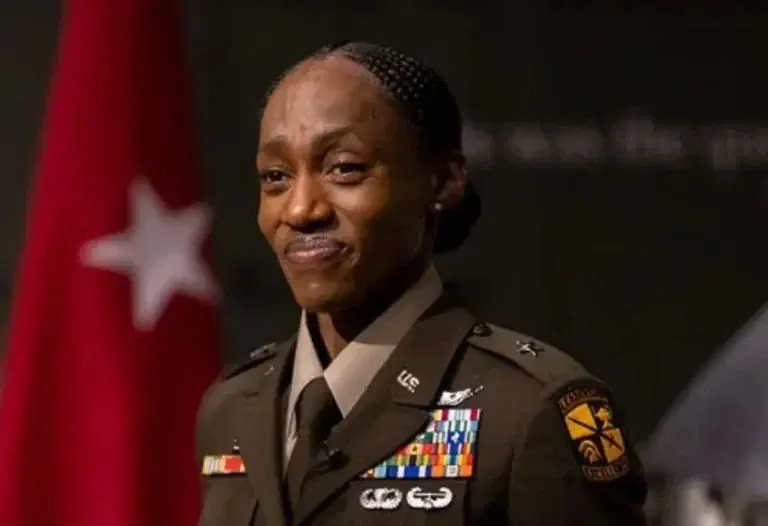
Amanda Azubuike has etched her name into history as the first woman of Nigerian heritage to earn the rank of Brigadier General in the United States Army, breaking barriers in a profession historically dominated by men. At age 57, her rise through the ranks exemplifies extraordinary dedication, resilience, and leadership across more than three decades of service.
Early Life and Background
Born in London, United Kingdom, Amanda Azubuike grew up in a multicultural family. Her father, of Igbo descent from Nigeria, went to Britain to pursue legal studies, where he met her mother, a Zimbabwean nursing student. After her parents’ separation, Azubuike and her sister relocated with their mother to the United States, where she would later become a U.S. citizen in April 1989.
Education and First Steps Toward Military Service
Azubuike’s interest in military service began while she was still in high school. At 17, she joined the Air Force Junior ROTC program at Jacksonville High School, an initiative that provides secondary school students with citizenship training and foundational aerospace science education.
She continued her education at the University of Central Arkansas, earning a Bachelor’s degree in Communications in December 1993. Shortly thereafter, in 1994, she entered the U.S. Army as an aviator following her completion of the Army Aviation Officer Basic Course.
Military Career and Major Assignments
Soon after her commissioning, Azubuike completed flight school in 1995 as a UH-1 helicopter pilot, beginning her career at Hunter Army Airfield in Georgia with the 924th Aviation Support Battalion, where she served as a platoon leader.
Her early assignments also took her to South Korea, serving with the 3rd Military Intelligence Battalion (Aerial Exploitation) as an operations officer and RC-12 pilot after completing advanced intelligence and fixed-wing qualifications.
Azubuike furthered her academic preparation with a Master of Professional Studies in Public Relations and Corporate Communications from Georgetown University, equipping her for increasingly strategic leadership roles.
Leadership Roles and Strategic Contributions
Over a distinguished career spanning more than 30 years, Azubuike transitioned from aviation assignments into high-level strategic and leadership roles within the U.S. Army, including:
Deputy Commanding Officer, U.S. Army Cadet Command
Chief of Public Affairs, U.S. Southern Command
Senior Military Advisor at the Pentagon
Her professional trajectory reflects significant responsibility in military intelligence, public affairs, senior guidance, and mentorship of future leaders.
Historic Promotion and Recognition
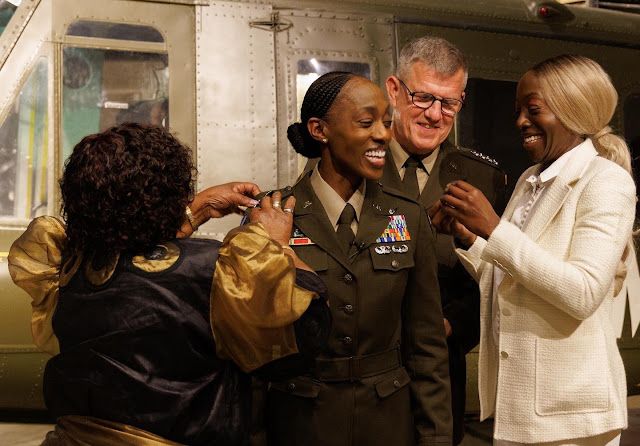
The pinnacle of her career came with her promotion to Brigadier General, marking her as the first Nigerian woman to reach this senior U.S. Army rank. This achievement not only honors her personal accomplishments but also stands as a symbol of recognition for women and particularly Black women rising through the ranks of military leadership.
Leaders both within and outside the military have acknowledged Azubuike’s achievement. In Nigeria, the Chairman/CEO of the Nigerians in Diaspora Commission, Hon. Abike Dabiri-Erewa, publicly congratulated her promotion, highlighting the global significance of her success for Nigerians and the diaspora community.
https://teamhousetv.com/wp-content/uploads/2026/01/Brown-Joyful-Happy-Birthday-Templates-Poster-Made-with-PosterMyWall-8.jpg10801080TeamAdminhttps://teamhousetv.com/wp-content/uploads/2025/08/Favicon-300x101.pngTeamAdmin2026-01-09 09:50:362026-01-09 09:50:39From Aviation to the Pentagon: Amanda Azubuike’s Historic Rise in the U.S. Army
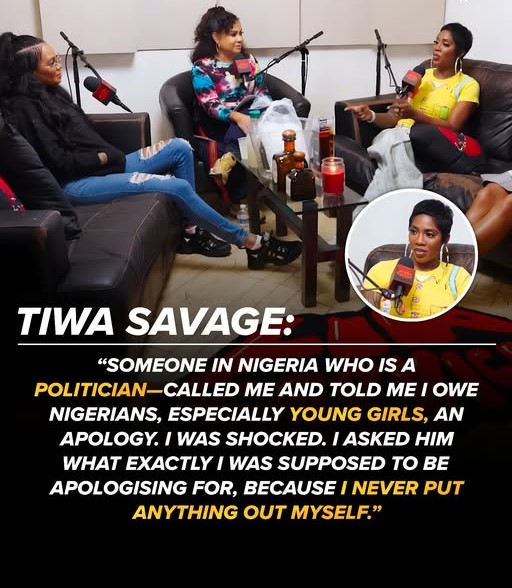
Nigerian music star Tiwa Savage has revealed that she was urged by a Nigerian politician to issue a public apology following the circulation of her leaked private video — a demand she firmly but calmly rejected.
Speaking during a conversation with American radio host Angela Yee, alongside three other women, the award-winning singer reflected on the period following the viral spread of the footage and how she processed the situation.
Tiwa Savage said the call from the politician left her feeling both stunned and confused. According to her, the individual insisted that she owed Nigerians – particularly young girls – an apology over the incident.
She explained that she immediately questioned the basis of the demand, pointing out that she had not released the video herself. In response, the politician reportedly argued that allowing an intimate moment to be recorded was itself inappropriate.
Tiwa countered by clarifying that the man involved was her boyfriend at the time and stressed that she had no knowledge that the recording was being made. She said she was completely unaware of the camera.
Reflecting further, the singer noted that the experience opened her eyes to a broader issue. She questioned how many people may have been violated in similar ways without their stories ever becoming public.
Her comments shed light on the personal impact of the incident and the wider conversation around consent, privacy, and accountability in cases involving leaked intimate content.
https://teamhousetv.com/wp-content/uploads/2026/01/b2ac1d5b9bb12a48accddffd415e7e63-1.jpg579706TeamAdminhttps://teamhousetv.com/wp-content/uploads/2025/08/Favicon-300x101.pngTeamAdmin2026-01-08 15:54:352026-01-08 15:56:26“I Didn’t Know I Was Being Recorded” – Tiwa Savage Rejects Apology Demand After Tape Leak
Renowned Nigerian author Chimamanda Ngozi Adichie and her husband, Dr. Ivara Esege, are mourning the tragic loss of their 21-month-old twin son, Nkanu Nnamdi, who passed away on Wednesday, January 7, 2026, after a brief illness.
The heartbreaking news was confirmed on Thursday, January 8, 2026, in a statement issued by family representative Omawumi Ogbe.
The statement reads: “We’re deeply saddened to confirm the passing of one of Ms Chimamanda Ngozi Adichie and Dr Ivara Esege’s twin boys, Nkanu Nnamdi, who passed on Wednesday, 7th of January 2026, after a brief illness. He was 21 months old.
“The family is devastated by this profound loss, and we request that their privacy be respected during this incredibly difficult time. We ask for your grace and prayers as they mourn in private.
“No further statements will be made, and we thank the public and the media for respecting their need for seclusion during this period of immense grief.”
The announcement has elicited an outpouring of condolences from fans, literary figures, and admirers worldwide, with many sharing messages of sympathy and support on social media.
Adichie, acclaimed for bestselling novels such as Half of a Yellow Sun, Americanah, and her essay collection We Should All Be Feminists, has always fiercely guarded her family’s privacy. The couple, married since 2009, welcomed twin boys in 2024, a joyful milestone she revealed quietly in interviews the following year. They also have an older daughter born in 2016.
As the family grieves this unimaginable loss, the global literary community stands in solidarity, honoring the family’s request for space and privacy during this painful time. Our thoughts and prayers are with Chimamanda Ngozi Adichie, Dr. Ivara Esege, and their loved ones.
https://teamhousetv.com/wp-content/uploads/2026/01/Chiamanda.jpeg605806TeamAdminhttps://teamhousetv.com/wp-content/uploads/2025/08/Favicon-300x101.pngTeamAdmin2026-01-08 15:40:552026-01-08 15:40:57Nigerian Literary Icon Chimamanda Adichie Mourns Loss of Young Twin Son
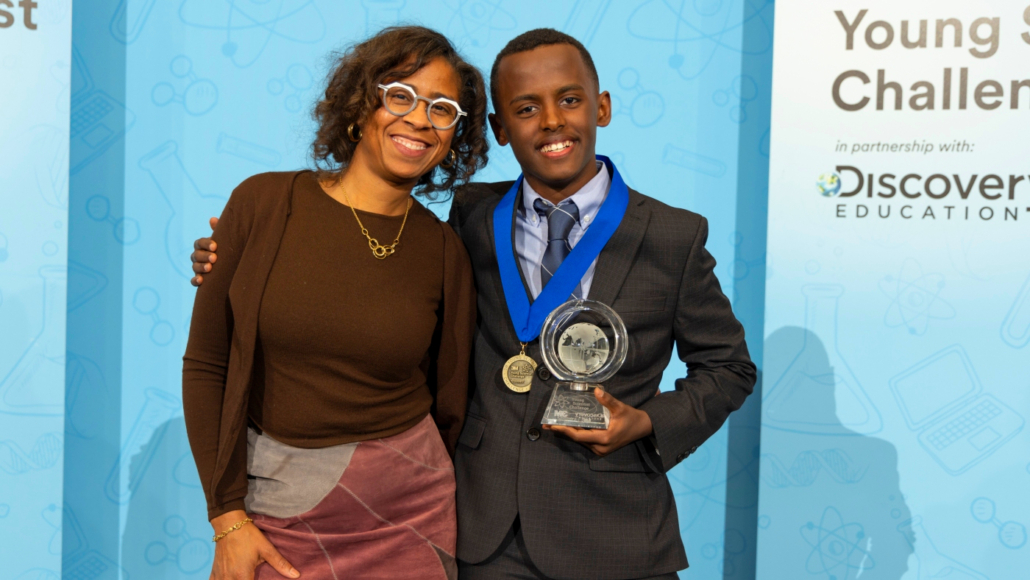
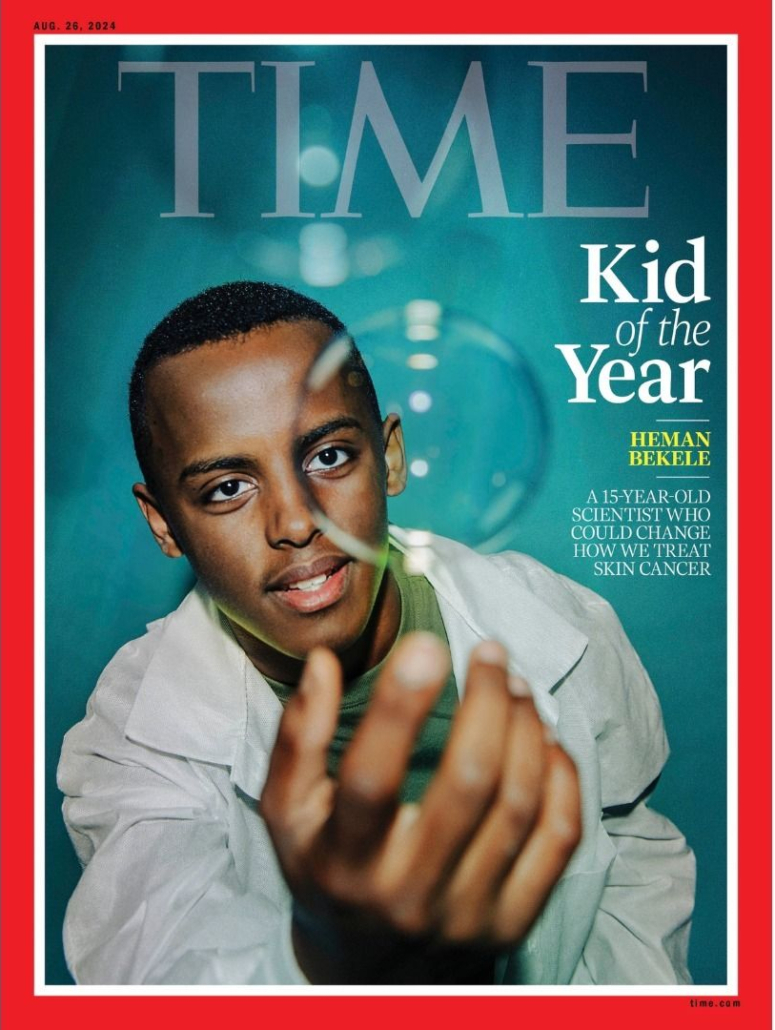
Fifteen-year-old Heman Bekele, an Ethiopian-born student living in the United States, has been named TIME Magazine’s 2024 Kid of the Year for his innovative research aimed at making skin cancer treatments more affordable and accessible.
Born in Addis Ababa, Ethiopia, Bekele moved with his family to the U.S. at a young age. Growing up, he showed a natural curiosity for science and medicine, often conducting experiments at home and immersing himself in scientific literature. His interest deepened as he learned about global health disparities – particularly the challenges faced by people who lack access to affordable medical care.
Bekele’s research journey began in earnest after his own family experienced the harsh realities of healthcare costs. Motivated by a desire to make a difference, he turned his attention to skin cancer – one of the most common cancers worldwide. Recognizing that current treatments can be prohibitively expensive and out of reach for many, especially in lower-income communities, he began developing a novel approach: a bar of soap capable of delivering cancer-fighting medication directly through the skin.
With guidance from mentors and access to laboratory resources, Bekele worked on refining his concept, incorporating compounds designed to stimulate an immune response against cancer cells. Though the soap remains in the early research and testing phase and is not yet approved for clinical use, the scientific community has acknowledged the potential of his work.
Bekele’s innovation stood out among thousands of submissions to TIME Magazine’s Kid of the Year program, which honors young individuals making significant contributions through creativity, leadership, and scientific achievement. His selection underscores the power of youth-driven innovation in tackling some of the world’s most pressing health challenges.
In addition to his scientific pursuits, Bekele is also actively involved in community outreach, where he encourages other young students to explore STEM fields and problem-solving through research and experimentation.
Bekele’s recognition by TIME places him among a growing group of young changemakers whose ideas and passion have made a meaningful impact, offering hope and inspiration for future advances in medical science.
https://teamhousetv.com/wp-content/uploads/2026/01/Brown-Joyful-Happy-Birthday-Templates-Poster-Made-with-PosterMyWall-1.png10801080TeamAdminhttps://teamhousetv.com/wp-content/uploads/2025/08/Favicon-300x101.pngTeamAdmin2026-01-08 08:18:172026-01-08 08:38:18Spotlight on Excellence: TIME’s 2024 Kid of the Year, Heman Bekele, and His Breakthrough Research