
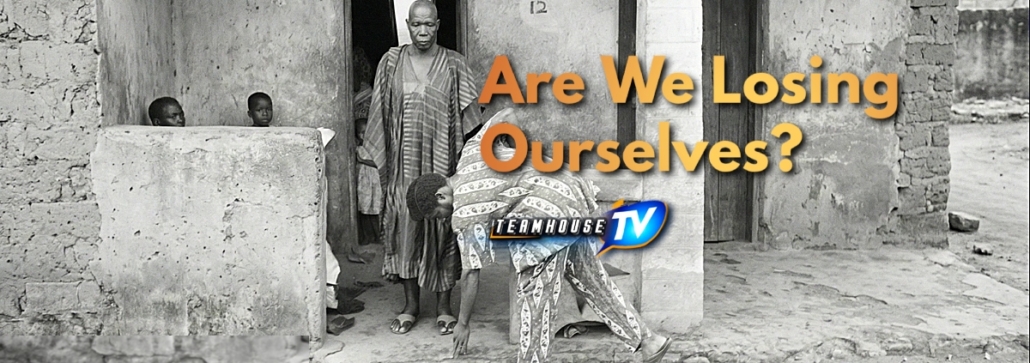
Are We Losing Ourselves? – The Quiet Erosion of Nigerian Culture in a Global Age
There was a time when you could recognize a Nigerian without asking—by the rhythm of their language, the texture of their clothing, the easy familiarity in how they greeted you. Culture was not something we performed; it was something we lived. It showed up effortlessly, in our homes, our humor, our values, and even in silence.
Today, that certainty feels less obvious.
Somewhere between global trends and digital validation, something subtle is shifting. Not loudly, not abruptly—but quietly, steadily. And the question we are almost afraid to ask is this: are we evolving… or are we slowly losing ourselves?
The truth is, the world has changed—and we have changed with it. The rise of social media has collapsed distance, bringing global culture into our hands in real time. What we wear, how we speak, what we aspire to—these are no longer shaped only by our immediate environment, but by a constant stream of external influence. Trends move fast, and identity, it seems, is trying to keep up.
It is now common to hear foreign slang woven seamlessly into everyday conversations. Phrases like “It’s giving…”, “periodt”, “as you should”, or “no cap” slip easily into speech, even among people who grew up speaking Yoruba, Igbo, Hausa, or Pidgin at home. In some spaces, sounding “too local” is quietly avoided—people soften their accents, switch their tone, or replace familiar expressions with imported ones. A simple “well done” becomes “good job,” “abeg” becomes “please,” and over time, the shift feels normal, almost unnoticed.
Indigenous languages are not always being rejected outright—they are simply being used less. A child who understands their mother tongue may still struggle to speak it fluently. Friends who share the same language default to English in conversation. What was once natural is now becoming optional.
Fashion tells a similar story. Ankara, aso-oke, and other traditional fabrics, once worn casually and confidently, are now often reserved for weddings, cultural days, or themed events. On regular days, global fashion trends dominate—cargo pants, streetwear, minimalist aesthetics inspired by Western influencers. Even when traditional pieces are worn, they are sometimes styled to fit a global standard, subtly reshaping their original identity.
At the same time, Nigerian culture has never been more visible. It is celebrated online—in weddings that go viral for their grandeur, in food content showcasing jollof rice, amala, and egusi, in dances that trend across continents. There is pride in this visibility, and rightly so. But it also raises a more uncomfortable question: how much of this expression is lived, and how much of it is curated?
It is not unusual to see someone who rarely engages with their culture offline present a highly cultural version of themselves online—dressed traditionally for content, using phrases they do not normally speak, participating in trends that attract attention. Culture, in these moments, can become performance—something displayed for validation rather than something deeply experienced.
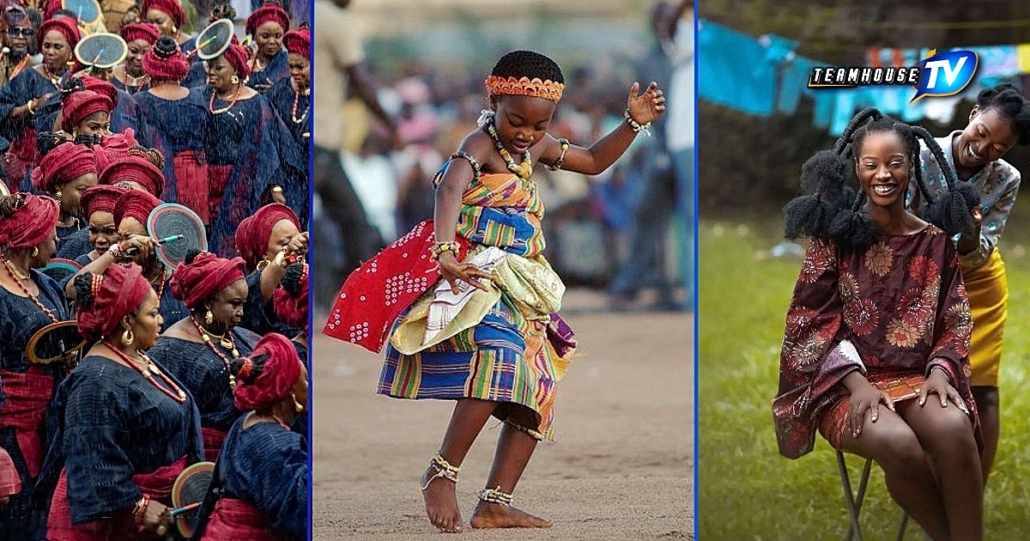
Still, it would be too simple— and perhaps unfair— to frame this entirely as loss. Culture is not static; it evolves. It adapts to time, context, and influence. What we are witnessing may not be erosion in the strictest sense, but transformation—messy, complex, and inevitable.
The real question, then, is not whether change is happening, but whether it is happening consciously.
Because culture is more than clothing, language, or aesthetics. It is memory. It is belonging. It is the quiet thread that connects generations, even when everything else changes. When that thread weakens, people may not notice immediately—but over time, something begins to feel unanchored.
Perhaps the real danger is not in becoming global, but in becoming disconnected. Not in adopting new ways, but in forgetting the meaning of the old ones. Not in evolving, but in doing so without intention.
Culture does not disappear overnight. It fades in the small, everyday choices—what we wear without thinking, what we stop practicing, what we slowly begin to overlook. And in those choices, we are shaping something, whether we realize it or not.
So maybe the question is not whether we are losing ourselves.
Maybe the question is whether we are paying enough attention to who we are becoming.









I think as the world is advancing we should pay more attention to who we are becoming.
We need to embrace progress and in doing that we need to balance modern influence and cultural heritage in order to preserve meaningful things.
Using fashion for instance, one strategy is by blending indigenous prints with modern styles, to keep up with modernity and preserve cultural elements.